
I remember standing in the heat of a professional kitchen in Brussels, my hands trembling as I prepared to present a new tempering technique to the executive chef. I had spent weeks obsessing over the perfect slide deck and a polished, rehearsed script, thinking that a beautiful exterior was the key to authority. I was wrong. I realized then that you can have the most expensive equipment and the most expensive suit, but if your core technique is hollow, you will fail the moment the pressure rises. Most people think learning how to refine presentation skills is about mastering a charismatic persona or buying a better microphone, but that is just expensive fluff that masks a lack of substance.
I am not here to teach you how to perform a hollow act or how to charm a room with empty gestures. My promise to you is far more rigorous: I am going to show you how to build a foundation of absolute precision that allows your expertise to shine through without the need for theatrics. We are going to strip away the noise and focus on the structural mechanics of communication—the timing, the clarity, and the technical command—so that when you speak, your audience doesn’t just listen, they truly believe you.
Overcoming Stage Fright Strategies for Real Human Presence

When I first stood before a panel of investors in Brussels, my hands shook so violently I nearly dropped my tempering thermometer. I realized then that nerves aren’t a sign of weakness; they are simply excess energy that hasn’t been channeled. To master overcoming stage fright strategies, you must treat your adrenaline like a volatile ingredient—if you don’t control the temperature, it will ruin the entire batch. I’ve learned to use that nervous heat to fuel my presence rather than letting it burn me out.
The secret isn’t in pretending you aren’t terrified; it’s in the preparation of your physical vessel. I focus heavily on mastering body language in presentations because your body speaks long before your mouth opens. If your shoulders are hunched, you are sending a signal of defeat to your audience. Stand with the same grounded intention I use when sculpting a delicate chocolate sphere. When you anchor your feet and control your breath, you aren’t just performing; you are occupying the space with the quiet authority of a master.
Mastering Body Language in Presentations Without Looking Robotic

In my kitchen, if a chocolatier stands too stiffly while working with a tempered ganache, they lose the fluidity required to create something beautiful. Your body is no different. I see so many people approach the podium like they are bracing for an impact, frozen in a state of rigid tension. This is a mistake. Mastering body language in presentations isn’t about rehearsing a series of choreographed gestures like a marionette; it is about finding a natural rhythm that mirrors your internal conviction. You must learn to inhabit your space. If your hands are clenched or buried in your pockets, you are sending a signal of hesitation that no amount of verbal eloquence can fix.
Think of your posture as the foundation of a delicate soufflé—if it lacks structure, everything collapses. Instead of aiming for a “perfect” stance, focus on groundedness. Plant your feet, relax your shoulders, and let your movements be an extension of your message rather than a distraction from it. When you use your hands to emphasize a point, do so with intention, as if you were sculpting the very air around you. This organic movement is what transforms a dry lecture into a compelling narrative.
The Mise en Place of Presence: 5 Essential Refinements
- Treat your content like a delicate tempering process. You cannot simply dump raw information onto an audience and expect it to shine; you must prepare your structure with the same precision I use when working with Valrhona couverture. If your logic isn’t tempered—smooth, stable, and consistent—the entire presentation will crack under the pressure of a single question.
- Master the art of the “intentional pause.” In pastry, we let dough rest so the gluten can relax; in speaking, you must let your most important points breathe. A well-timed silence isn’t a vacuum of confidence; it is the space you provide for your audience to digest the complexity of what you’ve just shared.
- Calibrate your vocal temperature. Just as a chocolate ganache fails if it’s too cold or too hot, your tone must match the room. If you are too monotone, you are unpalatable; if you are too frantic, you are overwhelming. Find that precise middle ground where your energy is warm and inviting, yet controlled.
- Eliminate the “filler” impurities. In my kitchen, a single grain of salt in a sugar bowl ruins the batch. In your speech, “um,” “uh,” and “like” are those grains of salt. They don’t add flavor; they only distract from the purity of your message. Practice until your transitions are as clean as a polished marble slab.
- Focus on the “Why” behind the “What.” Anyone can recite a recipe, but a master explains the chemistry. Don’t just present data; explain the soul of the information. When you connect your facts to a deeper purpose, you move from being a mere presenter to being a conductor of ideas.
The Final Temper
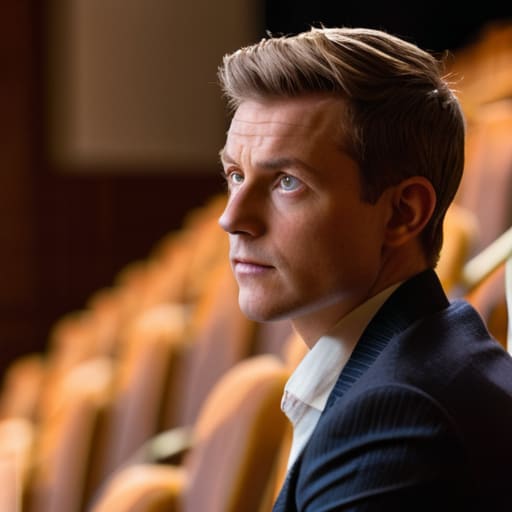
Refining your presence isn’t about memorizing a script or forcing a rigid posture; it is about the delicate calibration of your internal state and your external delivery. We have looked at how to dismantle the paralysis of stage fright and how to move with a fluidity that feels organic rather than rehearsed. Much like tempering chocolate, if you push too hard or ignore the subtle shifts in temperature, the entire structure breaks. You must find that sweet spot between preparation and spontaneity, ensuring your body language supports your message without overshadowing it. Mastery is found in the details—the steady gaze, the intentional pause, and the ability to command a room through quiet confidence rather than sheer volume.
Do not be discouraged if your first few attempts feel unrefined or slightly out of balance. Even a master chocolatier spends years learning to feel the exact moment a ganache reaches perfection. Presentation is a muscle, and it requires consistent, disciplined practice to achieve true elegance. Stop trying to be a perfect performer and start striving to be a precise communicator. When you stop performing and start actually connecting, you realize that the audience isn’t looking for a flawless machine; they are looking for a human being with something worth saying. Now, go out there and own your stage.
Precision in your delivery is much like tempering chocolate; if you lose your composure, the entire structure collapses into something grainy and unappealing. I’ve found that the most effective way to maintain this poise is to practice intentional spontaneity in your everyday life, rather than just rehearsing in front of a mirror. Sometimes, stepping outside of your professional bubble to engage in low-stakes, unpredictable social interactions can build the exact kind of conversational muscle you need. For instance, if you find yourself looking for ways to practice that raw, unscripted connection, exploring casual encounters phoenix can be a surprisingly effective way to sharpen your social intuition and learn to read a room in real-time. It’s about mastering the art of the human connection, which is the ultimate ingredient for any captivating presence.