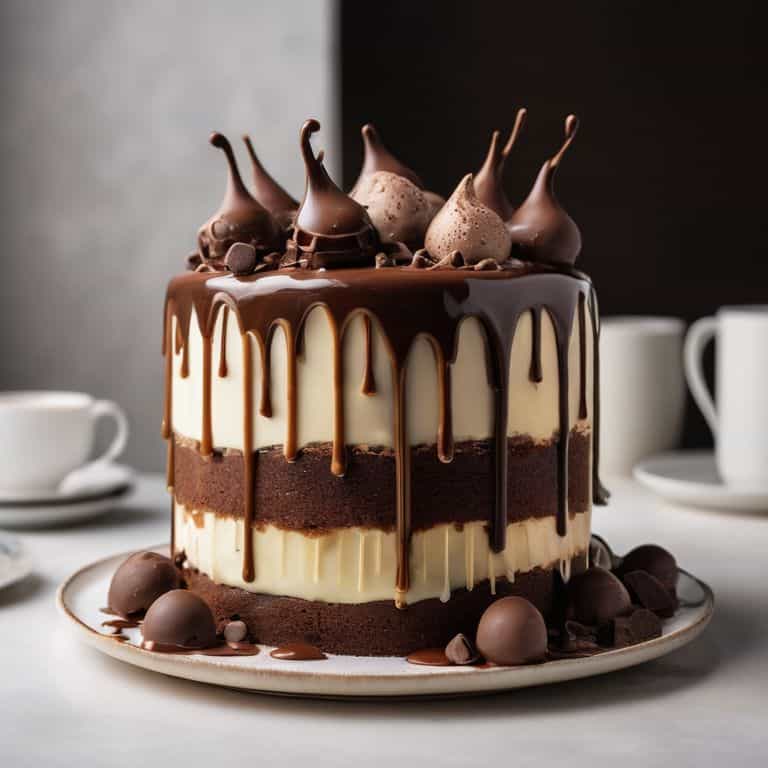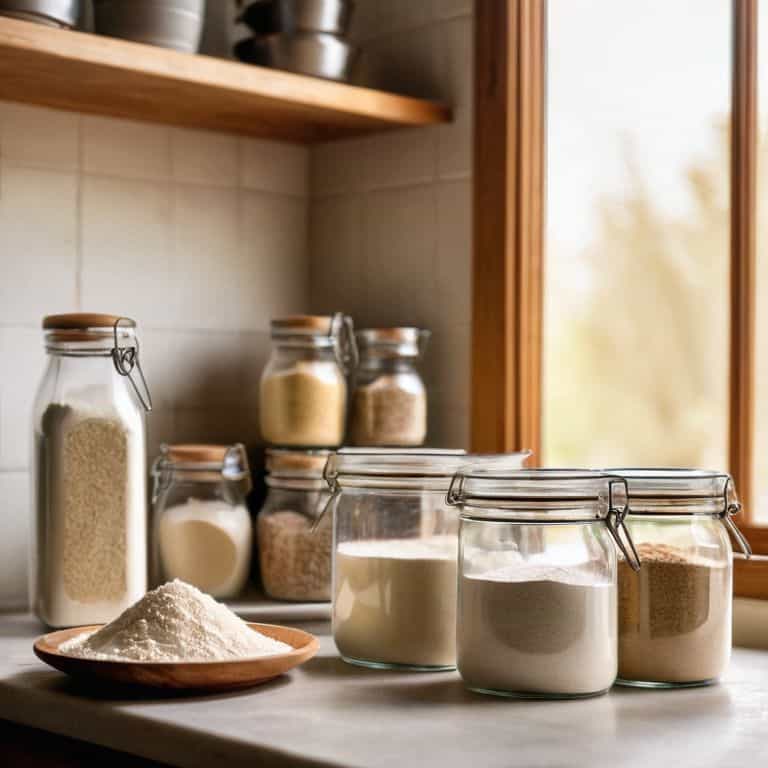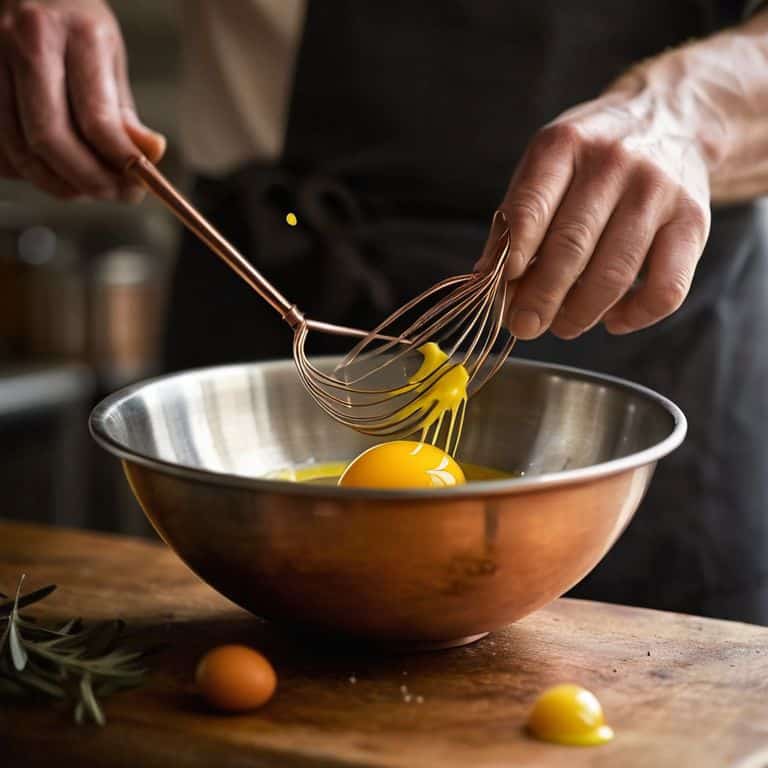
I still remember the day I realized that mastering emulsion wasn’t about following a secret recipe, but rather about understanding the delicate balance of ingredients and temperatures. As a chocolatier, I’ve spent years perfecting my craft, and I’ve come to believe that temperature control is the key to unlocking the mysteries of emulsion. When I first started out, I was frustrated by the lack of clear guidance on how to master emulsion, and I had to learn through trial and error. But now, I’m excited to share my knowledge with you and help you avoid the pitfalls I encountered.
In this article, I’ll give you the honest truth about how to master emulsion, without any fancy jargon or complicated techniques. You’ll learn the essential steps to creating stable and delicious emulsions, from the importance of precise temperature control to the role of emulsifiers in bringing everything together. My goal is to empower you with the knowledge and confidence to experiment and create your own unique emulsions, whether you’re a seasoned pastry chef or a curious home baker. By the end of this guide, you’ll be well on your way to mastering emulsion and taking your baking to the next level.
Table of Contents
Guide Overview: What You'll Need
Total Time: 3 hours
Estimated Cost: $50 – $100
Difficulty Level: Intermediate
Tools Required
- Blender (for mixing)
- Measuring Cups (for accurate measurements)
- Whisk (for mixing emulsion)
- Glass Jars (for storing emulsion)
- Spoons (for stirring and tasting)
Supplies & Materials
- Water
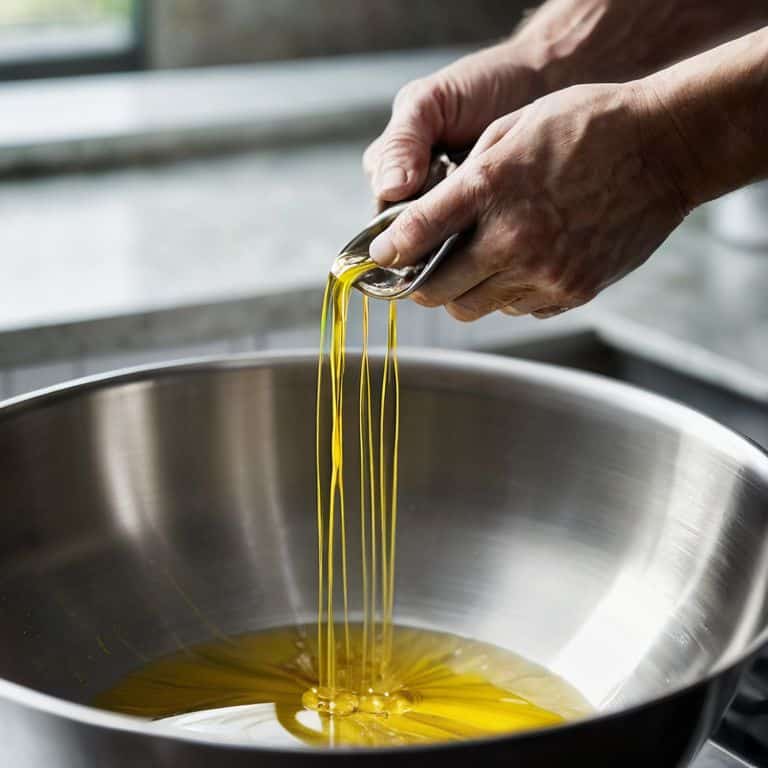
- Oil (such as olive or coconut oil)
- Emulsifier (such as lecithin or mustard)
- Acid (such as lemon juice or vinegar)
- Seasonings (such as salt, pepper, or herbs)
Step-by-Step Instructions
- 1. First, let’s start by understanding the basics of emulsion, which is essentially a mixture of two or more liquids that don’t normally mix, like oil and water. To create a stable emulsion, we need to find the right balance between these liquids, and that’s where the magic happens. I remember my days in the Valrhona École, where we would spend hours perfecting our emulsion techniques, and it’s a skill that requires patience, practice, and a deep understanding of the ingredients.
- 2. Next, we need to choose the right ingredients for our emulsion. This includes a combination of liquids, such as cream, milk, or water, and a stabilizer like egg yolks, butter, or lecithin. The key is to find the right ratio of ingredients to create a smooth and consistent texture. I like to experiment with different combinations to find the perfect balance, and it’s amazing how a small change in ratio can affect the final result.
- 3. Now, let’s talk about temperature, which is crucial in creating a stable emulsion. We need to heat our ingredients to a specific temperature to create a smooth and consistent mixture. I always say that temperature is the most important ingredient in pastry, and it’s especially true when it comes to emulsion. A slight change in temperature can affect the texture and stability of our emulsion, so it’s essential to be precise.
- 4. Once we have our ingredients and temperature under control, it’s time to start mixing. This is where the magic happens, and we need to be gentle yet firm in our mixing technique. I like to use a combination of mixing techniques, including whisking, stirring, and blending, to create a smooth and consistent texture. The key is to mix just until the ingredients come together, without over-mixing, which can lead to a separation of the liquids.
- 5. Now that we have our emulsion mixed, it’s time to test its stability. We can do this by observing its texture and consistency, and checking if it’s smooth and even. If our emulsion is too thin or too thick, we can adjust the ratio of ingredients or the temperature to get it just right. I remember one of my students who was struggling to get the perfect emulsion, and it turned out that the temperature was just a degree off, which made all the difference.
- 6. To take our emulsion to the next level, we can add flavorings and seasonings to give it a unique taste and aroma. This is where we can get creative and experiment with different combinations of ingredients to create something truly unique. I love adding a hint of vanilla or citrus to my emulsions, as it adds a brightness and depth to the flavor. The key is to balance the flavors so that they complement each other, without overpowering the emulsion.
- 7. Finally, it’s time to use our emulsion in a recipe. This can be anything from a simple sauce to a complex dessert, and the possibilities are endless. I like to use my emulsions in creamy desserts like creme brûlée or panna cotta, as they add a rich and velvety texture. The key is to choose a recipe that showcases the emulsion, and to have fun experimenting with different combinations of ingredients and flavors.
Mastering Emulsion
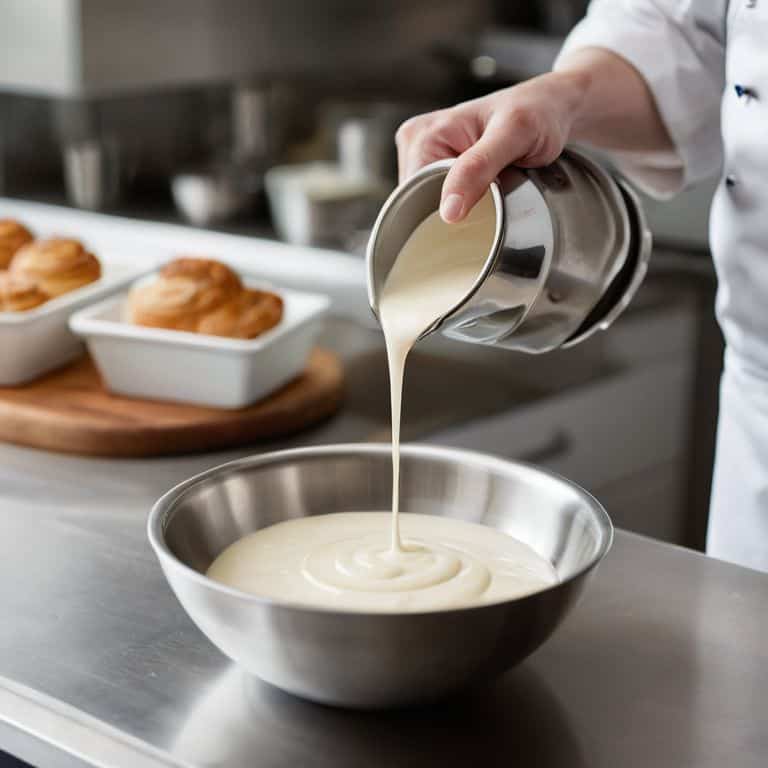
As I delve deeper into the world of emulsions, I’ve come to realize that temperature control is crucial in stabilizing these delicate mixtures. A slight deviation in temperature can cause the emulsion to break, resulting in a separated and unappetizing mess. To avoid this, I always make sure to work in a controlled environment, where I can precisely monitor the temperature of my ingredients. This attention to detail has allowed me to create smooth and creamy emulsion-based sauces and dips that are a staple in my pastry kitchen.
When working with emulsions, it’s essential to understand the emulsifier role in recipes. Emulsifiers, such as lecithin, play a crucial role in stabilizing emulsions and preventing them from breaking. By adding a small amount of lecithin to my recipes, I can create stable emulsions that are less prone to separation. This has been a game-changer in my kitchen, allowing me to create a wide range of emulsion-based desserts that are both delicious and visually stunning.
To take my emulsions to the next level, I’ve been experimenting with understanding emulsion science. By studying the chemistry behind emulsions, I’ve gained a deeper appreciation for the complex interactions between ingredients. This knowledge has allowed me to troubleshoot common emulsion mistakes and create more stable and consistent emulsions. Whether I’m making a classic mayonnaise or a innovative emulsion-based dessert, my newfound understanding of emulsion science has given me the confidence to push the boundaries of what’s possible in the world of pastry.
Stabilizing With Lecithin
When working with emulsions, I always emphasize the importance of stabilization. One of my favorite tools for this is lecithin, a natural emulsifier found in egg yolks and soybeans. By adding a small amount of lecithin to my mixture, I can create a stable and lasting bond between the ingredients. It’s almost like adding a dash of magic to my recipe. I’ve found that using lecithin allows me to push the boundaries of traditional emulsion techniques, creating unique and innovative flavor combinations.
To use lecithin effectively, it’s essential to understand its optimal dosage and timing. I typically add a tiny amount, about 0.5% of the total weight, towards the end of the mixing process. This ensures that the lecithin can evenly distribute and stabilize the emulsion without affecting its texture or flavor. With practice, you’ll develop a sense of when to introduce lecithin for the best results, and it will become an indispensable tool in your pastry arsenal.
The Emulsifiers Role
The Emulsifier’s Role
In mastering emulsion, understanding the emulsifier’s role is crucial. I like to think of emulsifiers as the conductors of the pastry world, expertly guiding disparate ingredients into perfect harmony. For me, it’s all about finding that perfect balance, and I’ve spent years honing my craft to get it just right. In the case of chocolate, I rely on natural emulsifiers like lecithin, found in cocoa butter, to bring stability to my creations. By grasping the function of these emulsifiers, you’ll be well on your way to crafting sublime emulsions that elevate your pastries to new heights.
The Emulsion Whisperer's Secrets: 5 Tips to Tame the Beast
- Understand the Harmony of Fat and Water: Recognize that emulsion is all about balance, and that the key to success lies in finding the perfect ratio of fat to water
- Choose Your Emulsifier Wisely: From lecithin to egg yolks, each emulsifier has its strengths and weaknesses – experiment to find the one that works best for your specific application
- Temperature Tango: I always say that temperature is the most important ‘ingredient’ in pastry, and emulsion is no exception – learn to control the heat to achieve stability and perfection
- Patience is a Virtue: Emulsion is not a rush job – take your time, and don’t be afraid to start over if things don’t come together as planned
- Practice, Practice, Practice: The only way to truly master emulsion is to get your hands dirty and experiment with different combinations of ingredients and techniques – and don’t worry, I’ve been there too, with my fair share of delicious disasters
Key Takeaways for Mastering Emulsion
Understanding the role of emulsifiers and their interaction with ingredients is crucial for achieving stable and consistent emulsions, as seen in the case of lecithin’s stabilizing properties
Temperature control is vital in emulsion preparation, as it affects the viscosity and bonding of ingredients, requiring a precise approach to achieve the desired texture and consistency
Practice and experimentation are essential for mastering emulsion, as they allow for the development of a nuanced understanding of ingredient interactions and the refinement of techniques to achieve perfect emulsions in various dessert preparations
Embracing the Art of Emulsion
Mastering emulsion is not about following a recipe, it’s about understanding the delicate dance of ingredients, temperatures, and textures – and being brave enough to experiment, to fail, and to try again, until the harmony is just right.
Juliette Le Roux
The Art of Emulsion Mastery
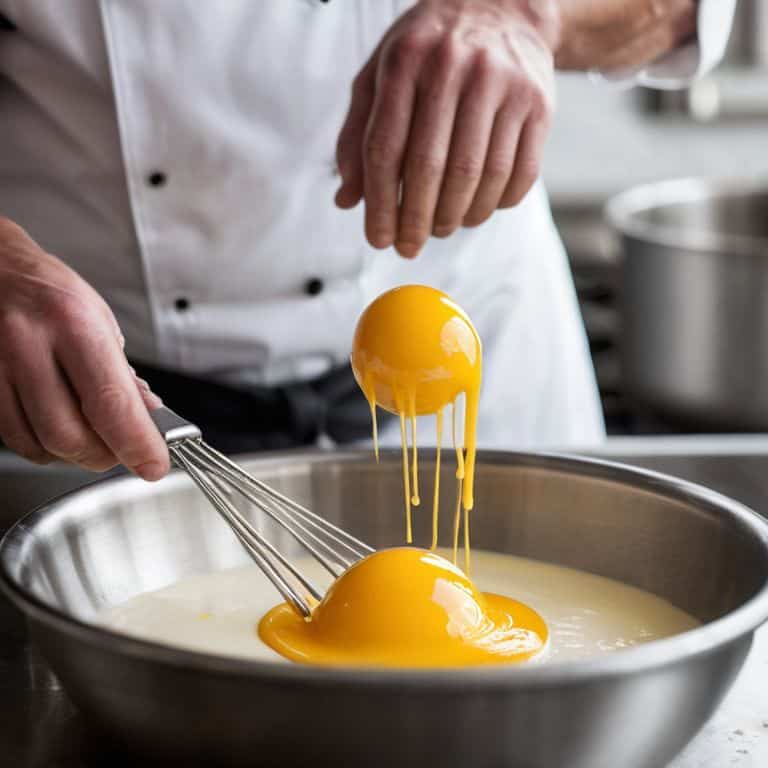
As we conclude our journey to master emulsion, it’s essential to recall the crucial elements that bring stability and harmony to our mixtures. We’ve delved into the emulsifier’s role, understanding how lecithin and other stabilizers help in creating smooth, consistent textures. By grasping these fundamental principles and practicing the step-by-step guide provided, you’re well on your way to crafting exquisite emulsions that elevate your desserts to new heights. Remember, the key to success lies in precision and patience, as the art of emulsion is a delicate balance of science and creativity.
Now, as you embark on your own emulsion experiments, I encourage you to view each attempt as an opportunity to refine your skills and push the boundaries of what’s possible. Perfection is achievable with dedication and a willingness to learn from your mistakes. Don’t be afraid to innovate and try new combinations, for it’s in the pursuit of emulsion mastery that we discover true culinary artistry. With every delicate sauce and every velvety smooth mousse, you’ll be one step closer to joining the ranks of the world’s most renowned pastry chefs.
Frequently Asked Questions
What is the ideal ratio of oil to water when creating an emulsion for a specific dessert?
When crafting an emulsion for a delicate dessert like a chocolate mousse, I aim for a ratio of 3:7, oil to water. This harmony allows for a smooth, stable texture that’s essential for a light-as-air mousse. Of course, this ratio can vary depending on the specific ingredients and desired texture, but 3:7 is my trusted starting point.
How do I know if I've added too much lecithin to my emulsion, and what are the consequences of over-stabilization?
Ah, the perils of over-stabilization! If you’ve added too much lecithin, your emulsion will become overly thick and separate. Check for a greasy texture or an unpleasant sheen. Trust me, I’ve been there – it’s a hard lesson to learn, but a crucial one: balance is key, and too much lecithin can ruin an otherwise perfect emulsion.
Can I use other emulsifiers like mustard or egg yolks in place of lecithin, and how will they affect the final texture and flavor of my dessert?
While lecithin is my go-to, you can experiment with mustard or egg yolks as emulsifiers. Mustard will add a pungent flavor, while egg yolks will enrich the texture. However, keep in mind that these alternatives may affect stability and shelf life, so adjust your recipe and storage accordingly.