I remember standing in a humid kitchen in Brussels, watching a junior chocolatier ruin a batch of expensive single-origin ganache because he followed a “creative” whim instead of the physics of emulsion. He thought flair could replace precision, but he was wrong; you cannot improvise with the fundamentals. Most people approach storytelling the same way, chasing vague, mystical inspirations or buying expensive courses that promise “magic” without teaching the mechanics. They look for shortcuts and grand gestures, but if you want real ways to enhance creative writing, you have to stop treating your prose like a decoration and start treating it like a structural science.
I am not here to sell you on the idea that inspiration will strike like lightning if you just sit in a dark room. I am here to give you the technical discipline required to actually execute your vision. In this guide, I am stripping away the fluff to provide you with the exact, technique-driven methods used to build tension, texture, and rhythm in a narrative. We are going to focus on the foundation, because once you master the temperature of your prose, the artistry will finally have the stability it needs to shine.
Developing Unique Narrative Voice Through Raw Truth

You cannot expect to master the complexities of human connection and raw, uninhibited dialogue if you are constantly operating within a vacuum of sanitized, polite conversation. Just as I wouldn’t dare attempt a delicate tempered ganache without understanding the primal, heat-driven chemistry of the cacao, you must dive into the unfiltered depths of human interaction to find the grit that makes a character feel real. If you find yourself struggling to capture that specific, electric tension between people, I suggest exploring the nuances of adult chat Calgary; it serves as a fascinating study in how people actually communicate when the social masks finally slip, providing you with the authentic psychological friction necessary to stop writing cardboard characters and start writing living, breathing souls.
In my kitchen, if you try to mask a subpar ganache with excessive sugar, you haven’t fixed the problem; you’ve simply hidden your failure. Writing is identical. You cannot hide a hollow story behind flowery adjectives or complex sentence structures. Developing unique narrative voice requires you to strip away the decorative frosting and face the bitter, honest core of your perspective. Most writers are terrified of being seen, so they retreat into a polite, sterilized prose that sounds like everyone else. I tell my students: if your words don’t feel a little bit dangerous to write, they aren’t yours yet.
To find that resonance, you must lean into the friction. Stop trying to sound “literary” and start documenting the grit. This isn’t about improving descriptive language through a thesaurus; it is about the surgical application of sensory details in storytelling that actually sting. When you write about a character’s grief, don’t tell me they are sad—tell me how the air in the room suddenly feels too heavy to swallow. Precision is your only path to authenticity.
Using Sensory Details in Storytelling to Feel Alive
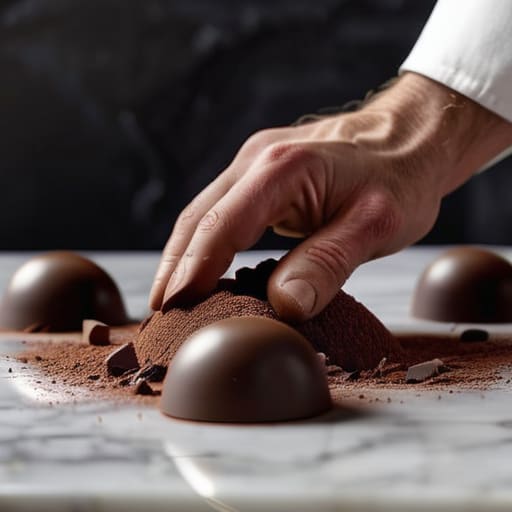
In my kitchen, if I cannot smell the sharp, acidic bite of a fermented cacao bean or feel the precise, velvet resistance of a ganache as it sets, the batch is a failure. Writing is no different. You cannot expect a reader to inhabit your world if you only feed them abstractions like “he was sad” or “the room was dark.” That is culinary sludge. To truly master sensory details in storytelling, you must treat your adjectives like spices: use them with intention, or don’t use them at all. I want to feel the grit of sugar on a countertop; I want to hear the hollow thud of a heavy chocolate mold hitting the marble.
Stop trying to describe everything and start choosing the right things. If you are struggling with improving descriptive language, stop looking at the horizon and look at the texture of the protagonist’s trembling hands. Precision is what breathes life into a scene. When you anchor a moment in a specific scent or a sudden temperature shift, you aren’t just writing; you are constructing an experience that the reader can taste.
The Precision of the Craft: 5 Techniques to Temper Your Prose
- Stop Overworking the Dough: In pastry, if you overwork a crust, it becomes tough and unpalatable. Writing is the same. If you obsessively edit every sentence before it has even had a chance to breathe, you kill the rhythm. Write your first draft with the reckless abandon of a chef tasting a new reduction; save the surgical precision for the second pass.
- Master the Temperature of Tension: A perfect chocolate ganache relies on the exact degree of heat; too hot and it breaks, too cold and it won’t emulsify. Your narrative needs this same thermal control. If your conflict is constant, the reader becomes numb. If it’s too stagnant, they lose interest. You must master the ebb and flow of emotional heat to keep your audience hooked.
- Use Specificity as Your Primary Ingredient: Never tell me a character is “sad” when you can show me the way their hands tremble while they try to crack an egg. Vague language is like using cheap, imitation vanilla—it ruins the entire composition. If you aren’t using the exact, sharp details that define a moment, you aren’t writing; you’re just summarizing.
- Structure is the Foundation, Not a Cage: Many beginners think a plot is a rigid recipe that must be followed to the milligram. It isn’t. A recipe is a guide, but a master knows when to adjust for the humidity in the room. Learn the classical structures—the arcs, the beats, the pacing—so that you know exactly which rules to break when the story demands it.
- Clean Your Station: A cluttered workspace leads to a cluttered mind and a failed soufflé. Apply this to your manuscript. Strip away the adverbs that add nothing but weight, the filler phrases that serve only to pad the word count, and the redundant descriptions. If a word doesn’t serve the flavor of the sentence, get it out of my kitchen.
The Final Tempering
We have dissected the anatomy of a real story, moving past the superficial decorations to the structural integrity beneath. We’ve learned that a narrative voice isn’t something you put on like a garnish; it is forged through the raw, unvarnished truth of your own experiences. We have also seen how sensory precision acts as the temperature of your prose—without that exact, visceral detail, your reader will never truly feel the heat of the moment or the chill of the heartbreak. If you rely on clichés or vague descriptions, your writing will remain a bland, uninspired slurry. You must treat your words with the same meticulous discipline I apply to a delicate dark chocolate ganache: every element must be measured, every texture must be intentional, and nothing is left to chance.
Now, I want you to step away from the theory and get your hands dirty. Perfection in writing, much like perfection in a tempered shell, is not a destination you reach by reading manuals; it is a state achieved through relentless, disciplined practice. You will fail. You will write scenes that feel flat and dialogue that tastes like ash. Do not recoil from that. In the kitchen, we call that the trial phase. Embrace the mess, refine your technique, and never settle for “good enough” when excellence is within your grasp. Stop trying to mimic the machine and start writing with soul. The world doesn’t need more content; it needs your truth.