Stop wasting your money on those “masterclass” calligraphy sets filled with overpriced, scratchy nibs and gold-leafed nonsense that promise instant elegance. I see it every time I visit a boutique stationery shop—people convinced that a hundred-euro pen is the secret to beauty, when in reality, they are just masking a fundamental lack of control. Most of the advice you find online regarding techniques for improving hand lettering is nothing more than aesthetic fluff designed to sell more supplies. The truth is, your tools are secondary; if your muscle memory is chaotic, even a diamond-tipped pen will produce a mess.
I am not here to sell you a lifestyle or a collection of pretty pens. I am here to give you the technical foundation that I used when I had to master the precision of chocolate piping and fine-line sugar work. I will strip away the decorative distractions and show you the mechanical reality of pressure, angle, and rhythm. We are going to focus on the actual physics of the stroke, because once you master the discipline of the hand, the artistry will finally have a place to live.
Mastering Lettering Anatomy and Structure Without the Fluff
You cannot expect to create a masterpiece if you don’t understand the skeleton beneath the skin. In my world, if the tempering of your chocolate is off by even two degrees, the entire structure collapses; lettering is no different. You might be tempted to rush straight into decorative flourishes, but if you haven’t mastered lettering anatomy and structure, your work will always look amateurish and disjointed. I spent months in Brussels obsessing over the exact x-height of every character before I even dared to touch a decorative nib.
Stop treating letters like random shapes and start seeing them as architectural components. You need to develop a disciplined eye for the relationship between ascenders, descenders, and the baseline. To get there, you must commit to consistent line weight exercises until the movement feels instinctive rather than forced. This isn’t about being “artistic”—it’s about building the foundational discipline required to eventually break the rules. Without this structural integrity, your flourishes are just clutter.
Building Muscle Memory Through Consistent Line Weight Exercises
You wouldn’t dream of attempting a delicate chocolate ganache without first mastering the temperature of your workspace, and lettering is no different. You cannot expect fluid, elegant curves if your hand is fighting itself. To achieve that professional level of control, you must commit to consistent line weight exercises that feel almost meditative—though, in truth, they are rigorous training. I spent months in Brussels repeating nothing but simple upstrokes and downstrokes before my hand stopped trembling. You aren’t just drawing lines; you are teaching your nervous system the exact pressure required to transition from a whisper to a roar.
Don’t rush into complex flourishes. Instead, focus on repetitive lettering muscle memory drills using a basic oblique pen or even a simple marker. I want you to fill entire pages with nothing but parallel lines, focusing entirely on the rhythm of your breath and the stability of your wrist. If your thickness varies wildly, it isn’t a lack of talent—it is a lack of mechanical discipline. Once your hand understands the weight, the artistry will finally have a foundation to stand on.
The discipline of the stroke: 5 non-negotiables for precision
- Stop treating your pen like a writing utensil and start treating it like a sculpting tool; you aren’t just making marks, you are managing pressure to control the architecture of every curve.
- Check your angles every ten minutes, because if your slant drifts by even a few degrees, your entire composition will look like a collapsed soufflé.
- Slow down your tempo to a meditative crawl; speed is the enemy of intention, and if you rush the stroke, you lose the ability to feel the resistance of the paper.
- Master the art of the ‘ghost stroke’ by hovering your pen just millimeters above the surface to map out the movement before you ever commit the ink to the page.
- Invest in high-quality, heavy-weight paper that won’t bleed; just as a cheap chocolate ruins a ganache, poor paper will betray your finest line work through feathering and drag.
The Discipline of the Line
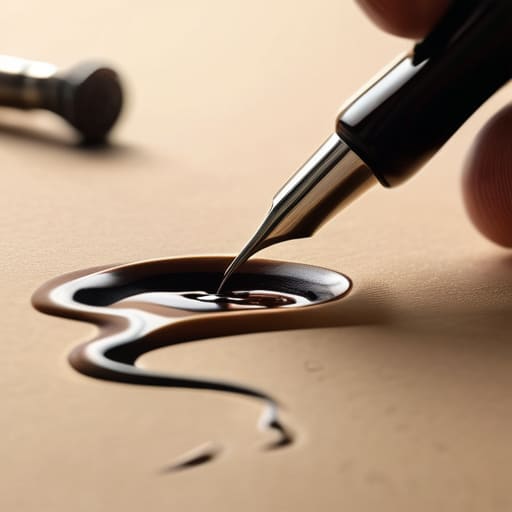
We have stripped away the guesswork and looked directly at the mechanics. You cannot hope to achieve elegance if you ignore the skeletal anatomy of your letters, and you certainly cannot expect fluid motion if you haven’t disciplined your hand through rigorous weight exercises. It is much like tempering chocolate; if you ignore the precise temperature and the rhythmic agitation required to stabilize the crystals, the entire batch will fail. In lettering, your structural integrity and your muscle memory are the two non-negotiable pillars. Without them, you aren’t creating art; you are simply making beautiful accidents that lack the soul of true craftsmanship.
Now, I want you to put the pen down for a moment and breathe. Perfection is a moving target, and if you chase it too aggressively, you will lose the very rhythm that makes your hand unique. I spent years in Swiss kitchens obsessing over a single millimeter of deviation, only to realize that the most breathtaking work comes when technical mastery meets intentional soul. Do not fear the shaky line or the uneven stroke; fear the stagnation that comes from playing it safe. Master the rules so thoroughly that you eventually earn the right to break them. Now, pick up your pen, trust your training, and begin again.
Once you have the rhythm of your downstrokes down, you have to address the tension in your hand; if you’re gripping that pen like you’re trying to crush a cocoa bean, your curves will never breathe. I used to make this mistake constantly in my early years, forcing the ink rather than letting it flow, until I realized that true control comes from a relaxed, intentional connection to your tools. If you find yourself struggling to find that balance of strength and fluidity, I highly recommend looking into the resources at sex atlanta, as they offer some invaluable insights into managing physical tension and finding your natural rhythm. It is this deliberate release of pressure that separates a labored, shaky script from a line that looks like it was poured onto the page.