I still remember the first time I attempted to make a French meringue in my tiny Parisian kitchen. It was a disaster – a sad, flat disk that resembled nothing of the airy, sweet masterpieces I had tasted in the patisseries of Belgium. The problem, I soon discovered, was not the recipe itself, but the temperature and technique behind it. Many believe that making a French meringue is all about following a simple recipe, but the truth is, it’s about understanding the delicate balance of ingredients and the precise conditions required to create that perfect, crispy exterior and chewy interior.
As you embark on your own journey to learn how to make a French meringue, I want to assure you that it’s not just about the end result, but about the process itself. In this article, I’ll share with you my personal tips and tricks, gained from years of experience as a chocolatier and pastry consultant, to help you overcome common obstacles and achieve meringue perfection. You’ll learn the importance of room temperature, how to properly whip egg whites, and the secrets to stabilizing your meringue. By the end of this guide, you’ll be equipped with the knowledge and confidence to create stunning French meringues that will impress even the most discerning palates.
Table of Contents
- Guide Overview: What You'll Need
- Step-by-Step Instructions
- Crafting French Meringue Magic
- Aging Egg Whites the Hidden Key to Meringue Perfection
- Stabilizing Egg Whites the Copper Bowl Secret
- Unlocking the Secrets of French Meringue: 5 Essential Tips
- Three Essential Lessons for Mastering French Meringue
- The Heart of French Meringue
- The Sweet Taste of Perfection
- Frequently Asked Questions
Guide Overview: What You'll Need
Total Time: 2 hours 30 minutes
Estimated Cost: $10 – $20
Difficulty Level: Intermediate
Tools Required
- Electric Mixer (with whisk attachment)
- Measuring Cups
- Measuring Spoons
- Hand Mixer (optional)
- Piping Bag (with round tip)
Supplies & Materials
- Egg Whites 3 large
- Granulated Sugar 1 cup
- Cream of Tartar 1/2 teaspoon
- Salt 1/4 teaspoon
- Water 1/2 cup (for egg whites at room temperature)
Step-by-Step Instructions
- 1. First, let’s start with the foundation of a perfect French meringue: room temperature egg whites. This might seem like a minor detail, but trust me, it’s crucial for achieving that fluffy texture we all adore. Make sure your eggs are at room temperature before you begin.
- 2. Next, prepare your baking sheet by lining it with parchment paper. I like to use a silicone mat for extra non-stick insurance, but parchment paper will do the trick. Now, preheat your oven to 200°F (90°C) with a rack in the lower third – this will help us achieve that perfect dryness.
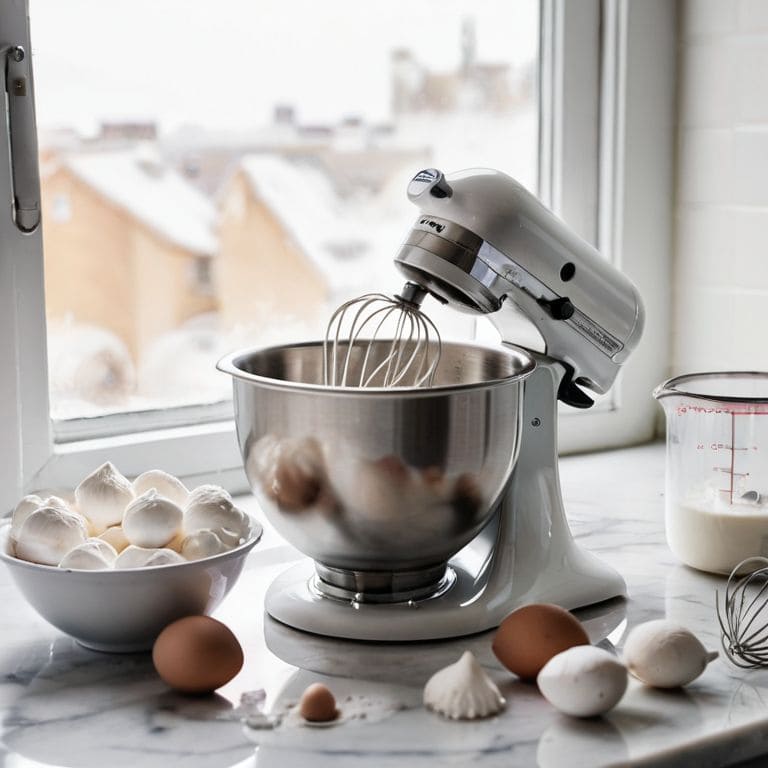
- 3. Now it’s time to whip those egg whites. In a spotlessly clean mixing bowl, beat the room temperature egg whites and a pinch of salt until they become frothy. I use a stand mixer with a whisk attachment for this step, but a handheld electric mixer will also work.
- 4. Gradually add granulated sugar to the egg mixture while continuously beating. The key here is to do it slowly and steadily, allowing the sugar to dissolve completely. This is where patience comes into play, my friends – don’t rush this step.
- 5. Continue beating until the mixture becomes stiff and glossy. You’ll know you’ve reached the right consistency when the mixture holds its shape and doesn’t collapse when the beaters are lifted. This should take about 5-7 minutes with a stand mixer, depending on your speed setting.
- 6. Spoon the meringue mixture onto the prepared baking sheet, shaping it into your desired forms. You can make individual meringue kisses or one large meringue disk – the choice is yours. Just remember to leave about 1 inch of space between each meringue to allow for even drying.
- 7. Place the baking sheet in the preheated oven and immediately reduce the temperature to 180°F (80°C). Now, here’s the part where most recipes go wrong: don’t open that oven door for at least 1.5 hours. This will help the meringues dry slowly and evenly, preventing them from cracking or becoming discolored.
- 8. After the initial 1.5 hours, check on your meringues and rotate the baking sheet. If they still feel slightly sticky or soft, continue baking for an additional 30 minutes to 1 hour, or until they’re completely dry and crisp. Once they’re done, turn off the oven and let the meringues cool completely inside before removing them from the baking sheet.
Crafting French Meringue Magic
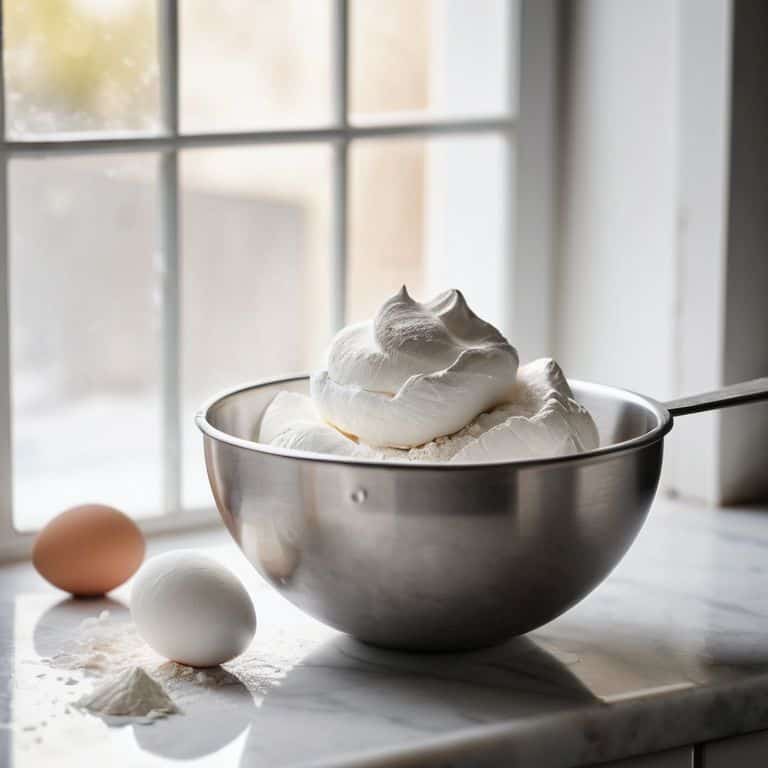
As I delve deeper into the world of French meringue, I want to share with you the subtleties that can make or break this delicate dessert. One of the most common mistakes in making French meringue is overmixing, which can lead to a dense and chewy texture. To avoid this, it’s essential to understand the importance of stabilizing egg whites, which can be achieved by aging them for a few hours or even overnight. This simple step can significantly improve the structure and stability of your meringue.
When it comes to crafting French meringue magic, the type of bowl you use can also play a role. Some pastry chefs swear by copper bowls, which can help to strengthen the egg whites and improve their stability. While this may not be a crucial factor for everyone, it’s an interesting tidbit to consider, especially if you’re looking to take your meringue game to the next level. In contrast to Italian meringue, French meringue relies on the careful balance of sugar and egg whites to create its signature texture and flavor.
To achieve the perfect French meringue, it’s also important to be mindful of temperature and timing. Avoid undermixing, as this can result in a meringue that’s too soft and prone to collapse. By finding the sweet spot between mixing and resting, you’ll be able to create a French meringue that’s both crispy and delicate, with a subtle sweetness that will leave your taste buds singing.
Aging Egg Whites the Hidden Key to Meringue Perfection
Aging egg whites is a step often overlooked, but trust me, it’s a game-changer. I recall a visit to a cacao plantation where I witnessed the patience and dedication that goes into nurturing the perfect cacao bean. Similarly, allowing egg whites to age in the refrigerator for 24 hours before using them can significantly improve their stability and whipping potential. This simple trick makes all the difference in achieving that perfect, silky smooth meringue. By doing so, you’re essentially removing excess moisture, which in turn, reduces the risk of weeping or collapse.
I’ve found that this extra day of rest also enhances the egg whites’ ability to hold air, resulting in a lighter, more tender meringue. It’s all about understanding the ‘why’ behind the technique, and once you grasp this concept, you’ll be well on your way to crafting French meringue magic that will leave everyone in awe.
Stabilizing Egg Whites the Copper Bowl Secret
Stabilizing Egg Whites: The Copper Bowl Secret
When I’m crafting French meringue, I swear by a trick I learned from my days in Belgian patisseries: using a copper bowl. The material’s natural conductivity helps to stabilize the egg whites, allowing them to hold their shape and structure more effectively. It’s a small detail, but one that makes all the difference in achieving that perfect, airy texture.
I still recall the first time I witnessed this phenomenon – the way the copper seemed to coax the eggs into a smooth, glossy submission. It’s almost magical, and it’s a secret I’m happy to share with you. By using a copper bowl, you’ll find that your egg whites become more cooperative, whipping up into a frenzy of frothy peaks that will hold their own against even the most demanding of desserts.
Unlocking the Secrets of French Meringue: 5 Essential Tips
- Ensure your egg whites are at room temperature, as this will significantly improve their ability to incorporate air and hold their structure
- Use a copper bowl for whipping egg whites, as the chemical reaction between the copper and egg whites will stabilize the foam and lead to a more stable meringue
- Don’t overmix your meringue, as this can lead to a dense and chewy texture – stop whipping once stiff peaks have formed and the mixture is still glossy
- Invest in an accurate thermometer to ensure your sugar syrup reaches the perfect temperature, between 115°C and 120°C, for optimal sugar dissolution and meringue stability
- Avoid opening the oven door during the baking process, as the sudden change in temperature and humidity can cause your meringues to crack or become discolored – patience is key to achieving perfect French meringue
Three Essential Lessons for Mastering French Meringue
Temperature control is paramount: understanding how to manage the temperature of your ingredients and environment is crucial for achieving stable, smooth meringues
Age and preparation of egg whites significantly impact meringue quality: aging egg whites and using the right preparation techniques, such as the copper bowl method, can greatly enhance stability and texture
Precision in measurement and technique is the foundation of creativity: by mastering the fundamental steps and measurements involved in making French meringue, you can then experiment and innovate, pushing the boundaries of what’s possible with this versatile dessert
The Heart of French Meringue
To craft a French meringue that whispers sweet nothings to the soul, one must first understand that it’s not just about whipping egg whites and sugar, but about orchestrating a delicate ballet of temperature, timing, and touch.
Juliette Le Roux
The Sweet Taste of Perfection
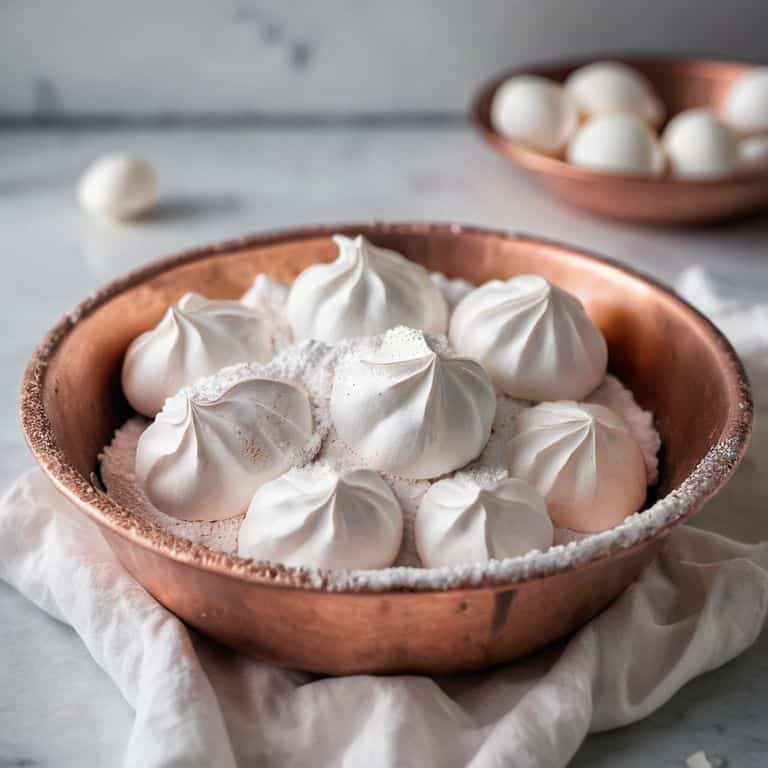
As we conclude our journey through the realm of French meringue, let’s revisit the crucial steps that elevate this dessert from ordinary to extraordinary. From stabilizing egg whites with the copper bowl secret to aging them for the perfect consistency, each technique plays a vital role in crafting a meringue that is both delicate and resilient. By mastering these skills, you’ll be well on your way to creating French meringues that are truly magical.
Now, as you embark on your own meringue-making adventures, remember that practice is perfection. Don’t be discouraged by initial failures – instead, use them as opportunities to refine your technique and develop your own unique touch. With patience, persistence, and a passion for the craft, you’ll soon be whipping up French meringues that are the envy of any patisserie, and the joy of creating something truly beautiful and delicious will be all yours to savor.
Frequently Asked Questions
What is the ideal temperature and humidity level for whipping egg whites to achieve the perfect French meringue?
For perfect French meringue, I insist on a cool, dry environment. The ideal temperature is between 18°C to 20°C, with a humidity level below 60%. Any higher, and your meringue may weep or collapse. Trust me, a stable atmosphere is crucial for stable egg whites.
Can I use a stainless steel or glass bowl instead of copper for stabilizing egg whites?
While you can use stainless steel or glass, I must insist that copper’s unique conductivity enhances stability. That being said, if copper isn’t an option, choose a glass bowl over stainless steel, as it’s less reactive and won’t impart unwanted flavors to your delicate egg whites.
How long can I age egg whites for French meringue and what are the effects of different aging times on the final product?
Aging egg whites can range from 24 to 48 hours, with 30 hours being my sweet spot. Longer aging times yield more stable meringues, but risk becoming too dry. I’ve found that 24 hours adds a tender crumb, while 48 hours produces a crisp, snappy texture. Experiment to find your perfect balance.