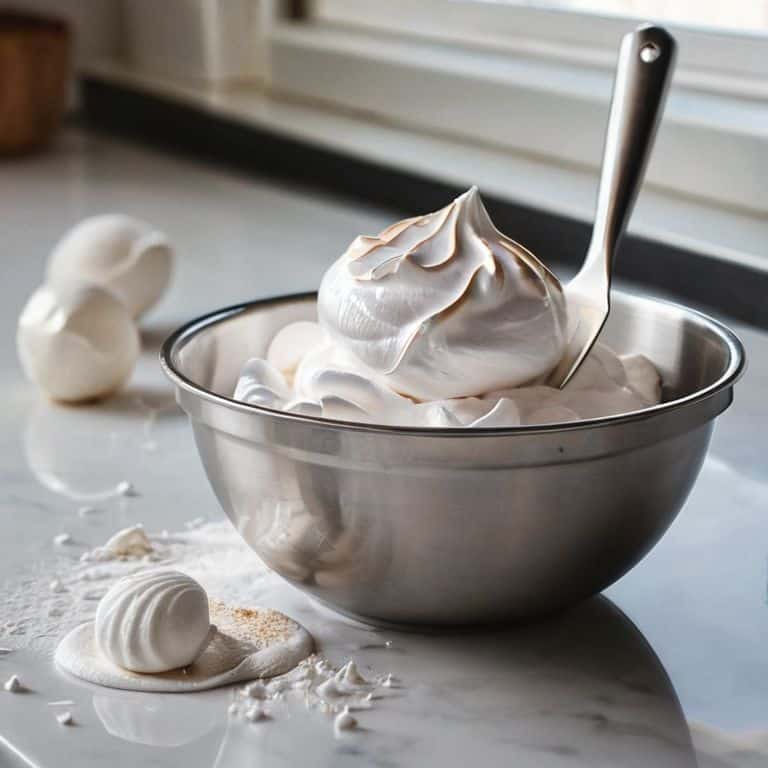
I still remember the first time I attempted to make Italian meringue – it was a disaster. The mixture was too runny, the sugar didn’t dissolve properly, and the whole thing ended up in the trash. But I was determined to master this notoriously finicky technique, and after months of trial and error, I finally cracked the code. The secret to success lies not in the ingredients, but in the temperature and timing of each step. If you’re struggling to get it just right, you’re not alone – but with the right guidance, you can make Italian meringue like a pro.
In this article, I’ll share my hard-won expertise on how to make Italian meringue that’s smooth, stable, and utterly delicious. I’ll walk you through the entire process, from preparing the egg whites and sugar to cooking the mixture to the perfect consistency. You’ll learn the importance of precision in measuring ingredients and controlling temperature, as well as the simple tricks I use to ensure success every time. By the end of this guide, you’ll be equipped with the knowledge and confidence to create stunning Italian meringue desserts that will impress even the most discerning palates.
Table of Contents
Guide Overview: What You'll Need
Total Time: 2 hours 30 minutes
Estimated Cost: $10 – $20
Difficulty Level: Intermediate
Tools Required
- Hand Mixer (or Stand Mixer)
Supplies & Materials
- Granulated Sugar 1 3/4 cups
- Egg Whites 3 large
- Water 1/2 cup
- Cream of Tartar 1/2 teaspoon
- Salt 1/4 teaspoon
Step-by-Step Instructions
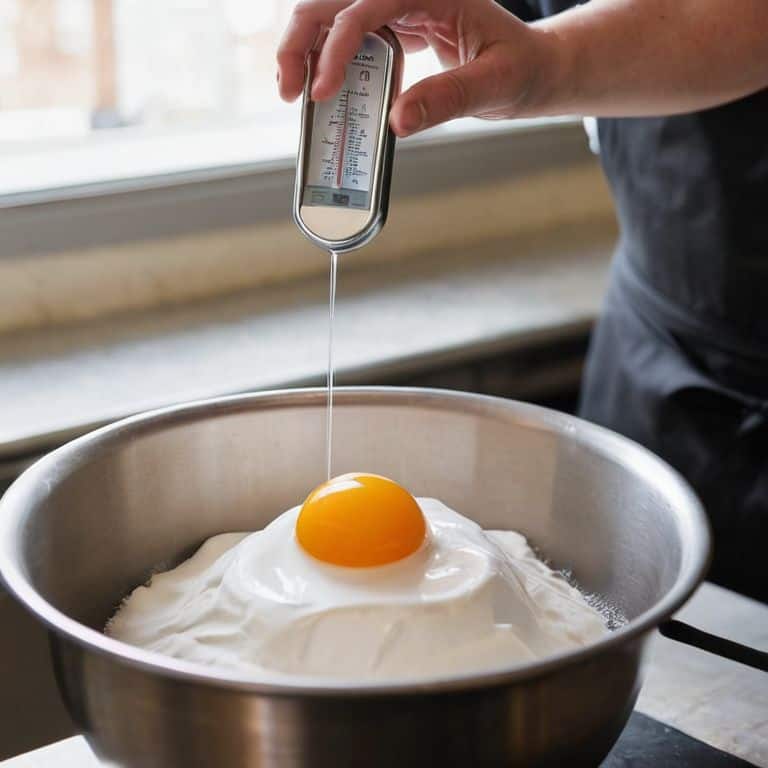
- 1. First, let’s get started with the foundation of our Italian meringue: preparing the sugar syrup. To do this, you’ll need to combine 1 1/2 cups of granulated sugar and 1/2 cup of water in a small saucepan. Place the saucepan over medium heat and stir until the sugar has dissolved, then bring the mixture to a boil. It’s essential to use a candy thermometer to monitor the temperature, as we’re aiming for 240°F (115°C) to create the perfect syrup.
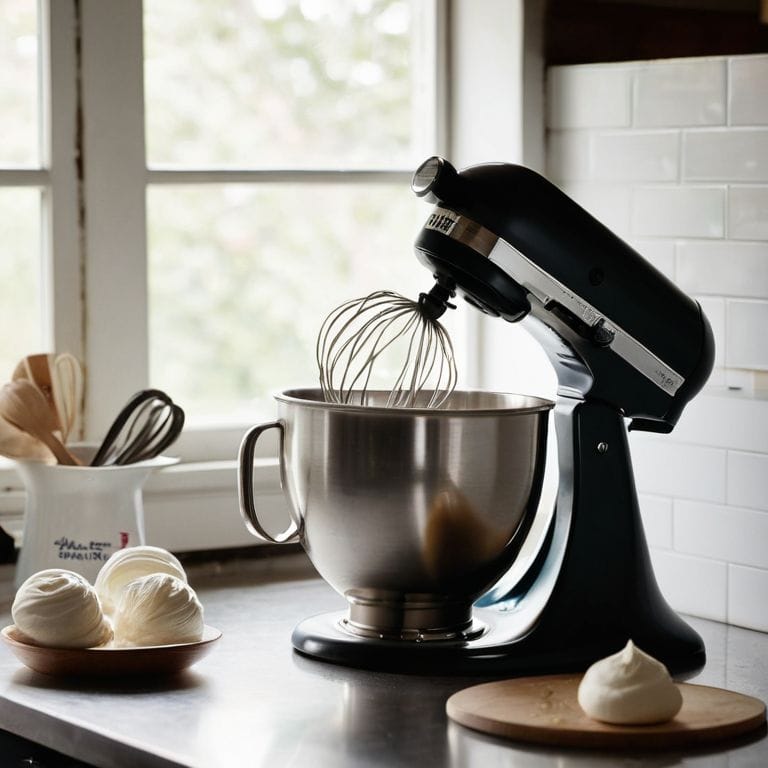
- 2. While the sugar syrup is cooking, let’s prepare our egg whites. You’ll need 3 large egg whites, which should be room temperature. In a stand mixer, beat the egg whites until they become frothy, then add 1 teaspoon of cream of tartar. This will help stabilize the eggs and create a more stable foam. Continue beating the eggs until they become stiff and hold their shape, but be careful not to overbeat.
- 3. Now that our egg whites are ready, it’s time to temper them with the hot sugar syrup. To do this, slowly pour the sugar syrup into the egg whites while continuously beating them with the stand mixer. It’s crucial to pour the syrup slowly, as we want to avoid cooking the eggs. The goal is to create a smooth, silky texture that’s essential for Italian meringue.
- 4. Continue beating the mixture for about 5-7 minutes, or until it has cooled to room temperature. You can test the temperature by feeling the outside of the bowl; if it’s still warm, continue beating. It’s essential to be patient during this step, as we want to ensure the mixture is completely cool before proceeding.
- 5. Once the mixture has cooled, it’s time to add any desired flavorings or colorings. For example, you can add a few drops of vanilla extract or a pinch of salt to enhance the flavor. If you’re feeling adventurous, you can also add a few drops of food coloring to create a unique hue. Just be sure to use high-quality ingredients that won’t affect the texture or stability of the meringue.
- 6. Now that our Italian meringue is ready, it’s time to shape it into the desired form. You can use a piping bag and tip to create intricate designs, or simply spoon the meringue onto a baking sheet lined with parchment paper. If you’re using a piping bag, be sure to hold it at an angle to create smooth, even lines.
- 7. Finally, it’s time to dry the Italian meringue in a low-temperature oven. Preheat your oven to 200°F (90°C) and place the meringue on the middle rack. Allow it to dry for 1 1/2 to 2 hours, or until it’s crisp and snaps cleanly when broken. This step is crucial, as it helps to remove any excess moisture and create a light, airy texture.
Cracking Italian Meringue
As I delve deeper into the world of Italian meringue, I’ve come to realize that stabilizing egg whites for meringue is an art form in itself. It’s all about finding that perfect balance between structure and airiness. To achieve this, I always make sure to control the sugar syrup temperature with precision, as it directly affects the stability of the meringue. A temperature that’s just a degree or two off can make all the difference between a smooth, silky meringue and a sad, weepy mess.
When it comes to common mistakes, I’ve seen many bakers fall into the trap of over-whipping their egg whites. This can lead to a meringue that’s too dense and brittle, rather than light and airy. On the other hand, under-whipping can result in a meringue that’s too soft and prone to weeping. It’s a delicate balance, but one that’s well worth mastering. For instance, I’ve found that using Italian meringue as a base for meringue based desserts can be a game-changer, especially when paired with a rich and creamy Italian meringue buttercream recipe.
To take your Italian meringue to the next level, I recommend experimenting with different flavor combinations and techniques. For example, you could try using whipped cream versus Italian meringue as a topping for cakes and pastries. The key is to understand the unique characteristics of each ingredient and how they interact with the meringue. By doing so, you’ll be able to create truly show-stopping desserts that are sure to impress even the most discerning palates.
Stabilizing Egg Whites Like Pro
To stabilize egg whites, I always say it’s all about the temperature and the touch. You want to bring your egg whites to room temperature before whipping, as this will help them to incorporate air more efficiently. Now, here’s where most people go wrong: over-whipping. Stop just before you think they’re stiff enough, then give them a gentle fold. This is where the magic happens, and your meringue starts to take shape.
I like to think of it as a delicate dance between firmness and flexibility. If you over-whip, you’ll end up with a meringue that’s too rigid, and it will inevitably collapse. But if you get it just right, with a smooth, silky texture, you’ll be rewarded with a meringue that’s both stable and sublime. Trust me, practice makes perfect, so don’t be discouraged if it takes a few tries to get the hang of it.
Sugar Syrup Secrets Revealed
To truly master Italian meringue, you must understand the nuances of sugar syrup. It’s not just about combining sugar and water – the temperature and concentration are crucial. I always say that temperature is the most important ‘ingredient’ in pastry, and this is particularly true when it comes to sugar syrup. If your syrup is too hot, it will collapse your meringue; too cold, and it won’t set properly.
My secret to achieving the perfect sugar syrup lies in precise temperature control. I aim for a consistent 240°F, which ensures the syrup is concentrated enough to provide structure without becoming too brittle. By mastering this step, you’ll be able to craft Italian meringue that’s both stable and smooth, with a delicate crunch that’s simply irresistible.
Meringue Mastery: 5 Essential Tips to Elevate Your Italian Meringue
- Use room temperature egg whites for optimal stability and aeration, as cold eggs won’t whip up as well and warm eggs can be too prone to over-whipping
- Create your sugar syrup with precision, aiming for exactly 240°F to ensure proper gelation and a smooth, glossy finish
- Age your egg whites in the fridge for at least 24 hours before using them, as this will help to reduce the risk of over-mixing and create a more stable meringue
- Don’t over-whip your meringue – stop once it reaches the stiff peak stage, as over-whipping can lead to a dense, weepy meringue that’s prone to collapse
- Use a water bath or a double boiler to gently heat your egg mixture, as direct heat can cause the eggs to scramble and the meringue to fail
Mastering Italian Meringue: 3 Essential Takeaways
Italian meringue is all about temperature control – ensuring your sugar syrup reaches exactly 240°F and your egg whites are stabilized at room temperature is crucial for success
Stabilizing egg whites with precision, whether through acidity or heat, is what sets professional Italian meringues apart from amateur attempts – practice makes perfect, so don’t be discouraged by initial failures
By mastering the art of Italian meringue, you’ll unlock a world of creative possibilities, from elegant desserts to intricate designs – the key is to experiment, innovate, and always, always focus on the ‘why’ behind each technique
The Italian Meringue Epiphany
To master Italian meringue, you must first surrender to its demands: precision, patience, and a deep understanding of the delicate dance between sugar, egg, and heat – for it’s in this fragile balance that we find perfection.
Juliette Le Roux
Mastering the Art of Italian Meringue
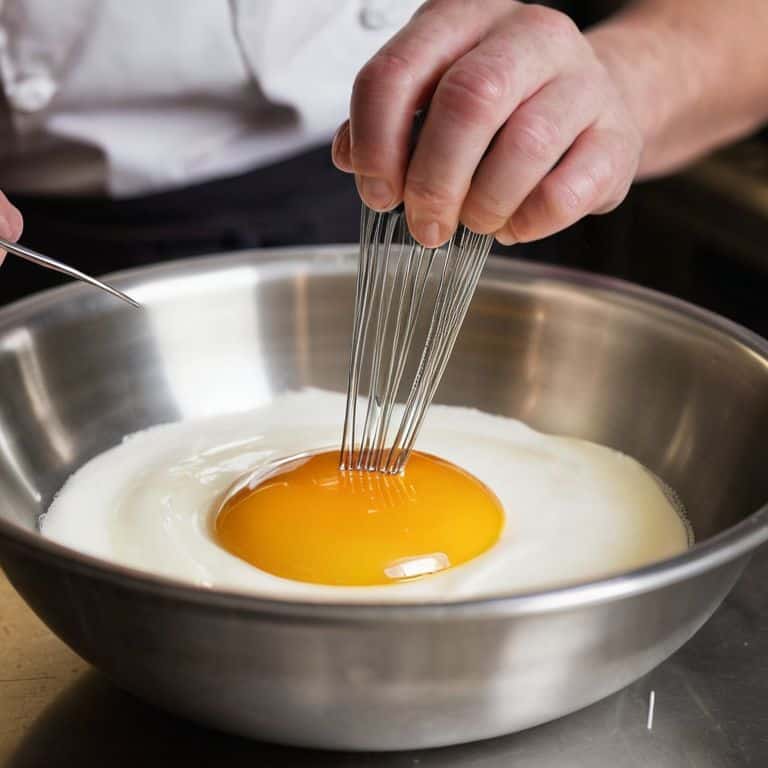
As we conclude our journey to create the perfect Italian meringue, let’s revisit the crucial steps that make all the difference. From preparing the sugar syrup to stabilizing the egg whites, each component plays a vital role in achieving that elusive, airy texture. Remember, temperature control is key, and precision is what sets apart a good meringue from a great one. By mastering the art of Italian meringue, you’ll unlock a world of possibilities for your desserts, from elegant pies to intricate cakes.
Now that you’ve armed yourself with the knowledge and skills to create flawless Italian meringue, it’s time to unleash your creativity. Don’t be afraid to experiment with new flavors and designs, and always keep in mind that practice makes perfect. As you continue to hone your craft, you’ll find that the pursuit of perfection is not just about the destination, but about the journey itself – the sweat, the tears, and the triumphs that make every perfectly piped meringue a true masterpiece.
Frequently Asked Questions
What is the ideal temperature for cooking the sugar syrup to ensure it reaches the perfect consistency for Italian meringue?
For Italian meringue, you want to cook the sugar syrup to exactly 240°F, the soft-ball stage. Any lower, and it won’t set properly; any higher, and it’ll be too brittle. Trust me, temperature is key here – I can feel it, and with practice, you will too.
How do I know if my egg whites are properly stabilized before adding the hot sugar syrup?
To check if your egg whites are stabilized, look for a smooth, glossy texture and a soft peak that holds its shape. If it’s still too runny, whip it a bit more. Trust me, it’s all about feel – with practice, you’ll develop the touch to know when it’s just right.
Can I use a handheld electric mixer instead of a stand mixer to whip the egg whites for Italian meringue?
While a handheld electric mixer can work, I must stress that precision and control are key. You’ll need to be meticulous with speed and timing to avoid over-whipping. If you don’t have a stand mixer, use a handheld with caution and keep a close eye on those egg whites – it’s a delicate balance.