
I remember standing in my kitchen in Brussels, surrounded by the frantic, rhythmic ticking of three different timers and the suffocating heat of a tempering marble, feeling like my brain was nothing more than a broken whisk. Everyone tells you that learning how to practice mindfulness meditation requires a silk cushion, expensive incense, and a complete departure from reality, but they are lying to you. In my world, if you can’t find stillness while the chocolate is seizing, you aren’t actually practicing anything—you’re just performing a theatrical version of peace that falls apart the second life gets messy.
I have no interest in selling you a lifestyle or a spiritual shortcut. Instead, I am going to show you how to apply the same rigorous, technical precision I use in pastry to the chaotic noise of your own mind. We are going to strip away the fluff and focus on the mechanical reality of presence. I will teach you how to anchor yourself using sensory precision, treating your attention like a high-stakes recipe where every micro-adjustment matters. No incense, no pretension; just the raw, honest work of learning how to practice mindfulness meditation when the world is actually burning down around you.
Stop Fighting Your Brain Real Mindfulness Meditation Techniques for Beginne

Look, I know what you’re thinking: if I can’t control my breathing, how am I supposed to control my mind? It’s exactly like tempering chocolate; if you rush the process or ignore the subtle shifts in the environment, the whole thing seizes up and becomes useless. You need a framework to lean on when your thoughts start racing like a broken whisk. I’ve found that when the mental noise becomes truly overwhelming, sometimes you need a different kind of unfiltered connection to snap yourself back into the present moment, much like how exploring sexting winnipeg can serve as a sudden, intense sensory anchor to the here and now. It isn’t about perfection, it’s about finding your anchor amidst the chaos.
Most people approach meditation like they approach a temperamental sugar sculpture: they try to force it into a shape that doesn’t want to be held. They sit down, expect immediate silence, and then panic when their brain starts screaming about grocery lists or old embarrassments. Listen to me: your brain is not broken; it is simply doing its job. When you try to force your mind to be still, you are essentially trying to temper chocolate by smashing it with a hammer. It won’t work. Instead, you must learn how to focus on breath as an anchor rather than a command. When a thought drifts in, don’t fight it. Acknowledge it like a stray crumb on a marble slab, sweep it aside mentally, and return to the sensation of air.
If you are struggling with the sheer chaos of your thoughts, I suggest starting with guided mindfulness exercises. There is no shame in using a voice to guide you through the fog; even I rely on precise timing and external cues when working on complex entremets. The goal isn’t to achieve a state of nothingness, but to build the muscle of returning to the present moment every single time you wander.
The Brutal Truth About How to Focus on Breath
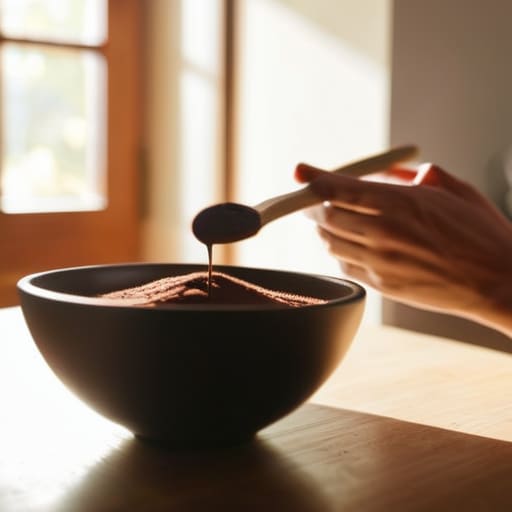
Listen to me: your breath is not a magic wand that will instantly silence your thoughts. If you sit down expecting a serene void, you are setting yourself up for failure. In my kitchen, if a ganache breaks, I don’t panic; I recognize that the emulsion has failed and I adjust the temperature. Meditation is the same. When you try to learn how to focus on breath, your mind will inevitably drift to your grocery list or that awkward thing you said in 2014. That isn’t a sign that you’re doing it wrong; it’s a sign that you are human.
The secret isn’t in the absence of distraction, but in the precision of your return. When you realize you’ve wandered off, do not beat yourself up. That moment of realization is actually the most important part of mindfulness meditation techniques for beginners. It is the mental muscle flex. Treat your focus like I treat a temperamental dark chocolate: it requires constant, gentle recalibration. You aren’t trying to stop the waves; you are simply learning how to stay steady on the surfboard.
Precision Over Presence: 5 Rules for When Your Mind Refuses to Cooperate
- Stop aiming for a “blank mind.” In pastry, if you try to force a sugar sculpture into a shape it doesn’t want to take, it snaps. Meditation is the same. You aren’t trying to delete your thoughts; you are simply observing them like a chef watches a reduction simmer. Don’t fight the bubbles; just notice them.
- Treat your focus like tempering chocolate. If the temperature is too high, you lose the structure; if it’s too low, nothing happens. Your attention has a thermal range. When you realize you’ve drifted into a daydream about your grocery list, don’t punish yourself. That’s just the temperature shifting. Gently bring it back to the center.
- Use a sensory anchor that actually works for you. For some, it’s the breath, but if that feels too abstract, try the weight of your body against the chair or the specific texture of the air hitting your nostrils. You need a tactile reality to return to, something as concrete as the weight of a heavy copper saucepan.
- Embrace the discomfort of the “stale” moments. There will be sessions where you feel absolutely nothing—no peace, no zen, just boredom. In my kitchen, the most important work happens during the long, quiet waits for dough to rise. These “boring” sessions are where your mental discipline actually hardens.
- Set a timer, not a goal. If you tell yourself, “I will achieve peace in twenty minutes,” you have already failed because you’ve created an expectation. Set a timer for ten minutes, sit down, and do the work. The goal isn’t the feeling of calm; the goal is the act of showing up to the bench.
The Final Tempering

Look, I know it feels like you’re failing every time your mind wanders back to your grocery list or that awkward thing you said in 2014. But mindfulness isn’t about achieving a state of frozen, crystalline stillness; it’s about the constant recalibration of your attention. We’ve discussed the reality of the wandering mind and the necessity of returning to the breath without the self-judgment that usually ruins the process. Just as you wouldn’t throw away a batch of ganache simply because the temperature fluctuated by a degree, you cannot discard your entire practice because you lost focus for a moment. The goal is the repetition of the return, not the absence of the distraction.
Mastering your internal landscape requires the same discipline I demand when I’m tempering a delicate couverture. You don’t get it right on the first try, and you certainly won’t get it right on the hundredth. You show up, you observe the heat, and you adjust. Stop treating meditation like a destination you can reach and start seeing it as a refined technical skill that you hone through sheer consistency. Perfection in pastry is a myth, but precision is a choice. Now, stop reading, sit down, and just breathe.