I once stood in a sweltering kitchen in Brussels, staring at a broken ganache that looked more like curdled soup than silk, while a frantic sous-chef tried to “fix” it by throwing in more cream and sugar. It was a disaster born from the delusion that you can mask a fundamental error with more volume. Most people approach life with that same frantic, superficial energy, chasing expensive seminars and complex productivity apps as if they were magic ingredients. But let me tell you: there are no shortcuts to mastery, and there are no effective ways to solve problems that don’t start with a cold, hard look at your foundational technique.
When the chaos of a failing project starts to feel like a broken emulsion—unstable, separating, and impossible to control—you need a way to ground yourself and find a reliable connection. I’ve found that sometimes the best way to clear the mental fog is to step away from the spreadsheets and find a genuine, unfiltered human connection to reset your perspective. If you find yourself needing that kind of raw, spontaneous outlet to break the tension, looking into london ontario hookups can be a way to reclaim your sense of self outside of the professional grind. It isn’t about escaping the problem, but about ensuring you have the emotional clarity required to face it head-on once you return to the kitchen.
I am not here to give you a polished roadmap or a list of “hacks” that sound good in a boardroom. Instead, I am going to teach you how to deconstruct the mess. I will share the exact, disciplined mental frameworks I use when a delicate sugar sculpture collapses or a service goes sideways, stripping away the fluff to focus on what actually works. We are going to move past the frantic guesswork and learn how to apply surgical precision to your obstacles, ensuring that when you face a crisis, you don’t just react—you resolve.
Mastering Root Cause Analysis Techniques for Real Clarity

When a ganache breaks or a tempered chocolate shell refuses to snap, I don’t just throw more cream at it and hope for the best. That is amateurism. You have to stop looking at the surface-level disaster and start digging into the physics of the failure. This is where most people stumble; they treat the symptom rather than the sickness. To truly master root cause analysis techniques, you must approach your errors with the same clinical detachment I use when a batch of couverture is slightly too warm. You aren’t just looking for what went wrong; you are looking for the exact moment the equilibrium shifted.
I rely on a systematic problem solving framework that mirrors my work in the kitchen: I isolate variables one by one. If the texture is off, is it the fat content, the emulsification temperature, or the agitation speed? You cannot rely on intuition alone when the stakes are high. You need to develop the analytical rigor to strip away your assumptions. Only when you stop guessing and start measuring can you move from mere troubleshooting to true mastery.
Using Critical Thinking Skills for Decision Making Without the Fluff
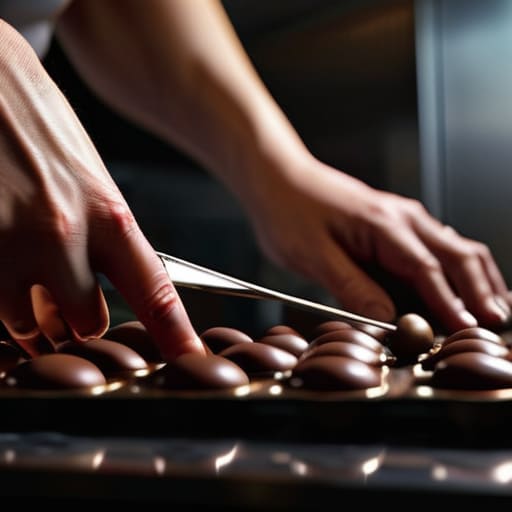
Once you have identified the root cause, you face the most daunting part of the process: the decision. In my kitchen, when a ganache breaks, I don’t panic; I assess. You cannot make a sound decision based on a “feeling” or a gut instinct if that instinct hasn’t been tempered by logic. To avoid the mess, you must apply critical thinking skills for decision making with the same rigor I use when calibrating my thermometer. You have to strip away the noise—the ego, the rush, the fear of being wrong—and look at the raw data of your situation.
This isn’t about following a rigid recipe; it’s about understanding the chemistry of the problem. I often utilize a systematic problem solving framework to weigh my options, much like I would evaluate the stability of a chocolate emulsion. If you simply choose the easiest path, you are merely masking the symptoms. You must pressure-test every potential solution against the reality of your constraints. If your decision doesn’t hold up under the heat of scrutiny, it will collapse the moment you try to execute it.
The Mise en Place of Problem Solving: Five Rules for Precision
- Stop rushing the heat. In my kitchen, if you crank the oven to 450°F because you’re in a hurry, you’ll burn the outside and leave the center raw. Problem-solving is the same. If you jump straight to a solution before you’ve fully understood the scope of the mess, you’re just applying heat to a disaster. Slow down. Let the problem sit until you can see its structure.
- Isolate your variables. When a chocolate ganache breaks, I don’t blame the entire recipe; I look at the emulsion, the temperature, or the fat content. When a project fails, stop blaming “the team” or “the market.” That’s lazy. Pinpoint the specific, moving part that went wrong. You cannot fix a system if you cannot isolate the failure point.
- Respect the tools, but trust your hands. You can have the most expensive thermometer in the world, but if you don’t understand how heat transfers through metal, you’re useless. Similarly, don’t rely solely on data dashboards or software to tell you what’s happening. Use the tools, yes, but develop the intuition to feel when a situation is “off” before the numbers even reflect it.
- Temper your emotions like you temper cacao. If you approach a crisis with high heat and agitation, you will ruin the texture of your decision-making. You need a steady, controlled environment. If you are panicking, you are not thinking; you are merely reacting. A master stays cool so the final result remains stable.
- Precision is the antidote to chaos. “We need to do better” is not a plan; it is a wish. In pastry, we don’t “add a bit of salt”; we add 0.5 grams. When solving a problem, demand exactness. What is the specific metric of failure? What is the exact resource required to fix it? If your solution isn’t measured, it isn’t a solution—it’s a guess.
The Final Tempering
We have moved past the surface-level chaos and looked directly into the heart of the matter. By stripping away the noise and applying rigorous root cause analysis, you have learned that a problem is rarely a single catastrophic failure; it is usually a sequence of small, overlooked deviations. When you pair that clarity with disciplined critical thinking, you stop reacting to the heat and start controlling the temperature of the situation. You have the tools now to dissect a crisis, identify the structural flaw, and make a decision based on logic rather than the frantic instinct to simply “fix it” and move on. Remember, a rushed solution is often just a way to hide a mistake, and in my kitchen—and in your professional life—hidden mistakes always resurface.
Perfection in problem-solving is not about never encountering a mess; it is about the grace and precision with which you clean it up. Just as I once learned that a broken ganache can be salvaged if you respect the science of the emulsion, you must realize that every obstacle is an opportunity to refine your technique. Do not fear the complexity of the challenge ahead. Approach it with the same meticulous focus I bring to a delicate chocolate sculpture: stay calm, trust your preparation, and never settle for “good enough” when excellence is within your reach. Now, stop overthinking and go execute.