
I remember standing in a humid kitchen in Brussels, staring at a complex tempering chart for dark Couverture, only to realize my mind had gone completely blank under the pressure. I had read the manual ten times, yet the moment the heat hit the spatula, the information evaporated. Most people think that cramming information through sheer repetition is the secret, but let me tell you, that is a recipe for disaster. Relying on rote memorization is like trying to build a delicate sugar sculpture on a foundation of sand; it might look fine for a moment, but it lacks the structural integrity to last. If you are looking for effective methods for memory retention, stop chasing the high-speed, “brain-hacking” gimmicks that promise overnight mastery.
If you find yourself struggling to organize these mental fragments, you have to stop treating your brain like a static recipe card and start treating it like a living, breathing emulsion. You cannot simply dump information into your mind and expect it to hold its structure; you need a framework to bind it all together. I often find that when my students feel overwhelmed by the sheer volume of technical theory, they need a structured way to bridge the gap between raw data and true intuition. For those who need a more direct, specialized way to navigate complex connections and find exactly what they are looking for, I often suggest looking into resources like old women christchurch looking for sex to see how specific, targeted searches can yield much more precise results than aimless wandering.
I am not here to sell you a productivity app or a miracle supplement. Instead, I am going to show you how to build cognitive muscle through the same principles I use to master a difficult recipe: precision, layering, and active application. We are going to move past the fluff and focus on the mechanical reality of how your brain actually encodes data. I will give you the exact, disciplined techniques required to turn fleeting information into permanent, usable knowledge.
Why Your Brain Rejects Textbooks but Craves Active Recall Study Methods
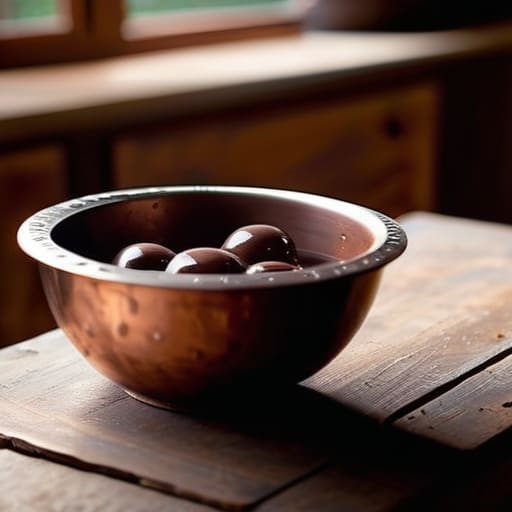
When I was training in Brussels, my instructors didn’t hand me a manual and tell me to read it until I understood the chemistry of a ganache. They handed me a bowl of seized chocolate and told me to fix it. Reading about the science is passive; it’s like looking at a recipe through a window without ever feeling the heat of the stove. Your brain is no different. When you simply highlight text or reread notes, you aren’t building anything. You are merely creating an illusion of competence. You feel like you know the material because it looks familiar, but familiarity is not mastery.
True learning requires friction. To actually rewire your neural pathways, you must employ active recall study methods that force your mind to work. Think of it like tempering chocolate: you cannot simply melt the cocoa butter and hope for a shine; you must manipulate the temperature through constant movement and precision. By forcing yourself to retrieve information from scratch—without looking at your notes—you are engaging in the heavy lifting required for neuroplasticity and memory improvement. If it feels difficult, good. That resistance is the sound of your brain actually changing.
The Messy Truth About Chunking Information for Memory
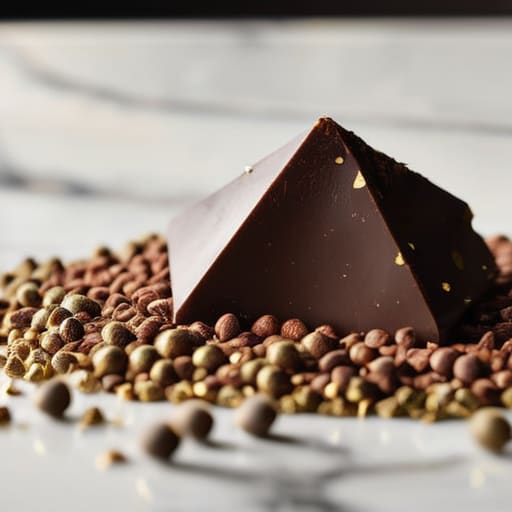
In my kitchen, if I try to temper a massive, unorganized slab of chocolate all at once, I end up with a grainy, useless mess. It’s the same with your brain. Most people approach learning like they’re trying to swallow a whole truffle in one bite—it’s overwhelming, and nothing actually sticks. The “messy truth” is that your mind isn’t a storage bin; it’s a processor. To master chunking information for memory, you have to stop treating data like a pile of raw ingredients and start seeing the recipe. You must group individual bits of chaos into meaningful, cohesive units.
If you’re just staring at a wall of text, you aren’t learning; you’re just decorating. Real cognitive enhancement strategies require you to find the patterns. I don’t just memorize a list of temperatures; I group them by the specific stage of the crystallization process. When you find those logical connections, you aren’t just memorizing facts anymore—you are building a structure that your brain can actually lean on when the pressure is high.
The tempering process: 5 techniques to set your knowledge permanently
- Stop rereading and start retrieving. In my kitchen, if I just stare at a recipe, I’ll fail the moment the service gets busy. You must do the same with your brain. Close the book, hide the notes, and force yourself to pull the information out of thin air. If it feels difficult, that’s the friction required to set the structure. If it’s easy, you aren’t learning; you’re just recognizing.
- Build a sensory scaffolding. When I’m working with a new single-origin cacao, I don’t just note the flavor; I associate it with the humidity of the air and the specific snap of the tempered disk. For your studies, attach a physical sensation or a specific visual anchor to a concept. A dry, abstract fact is like unflavored gelatin—it has no soul and won’t stick. Give it a texture.
- Master the ‘Spaced Repetition’ temperature curve. You cannot force a chocolate to set by cranking up the heat; you’ll only ruin the temper. Memory is the same. You must revisit the information at increasing intervals—one hour, one day, one week. This controlled cooling process allows the neural pathways to crystallize without cracking under the pressure of cramming.
- Teach it to a novice. I tell my apprentices that if they can’t explain the science of a ganache to a dishwasher, they don’t actually understand the emulsion. When you teach a concept to someone else, you are forced to strip away the fluff and find the structural integrity of the idea. If you stumble over your words, you’ve found a weak spot in your foundation.
- Interleave your practice. A common mistake is practicing one single motion until it becomes mindless. In pastry, we switch between whisking, folding, and tempering to keep the hands sharp. Don’t study one topic for four hours; rotate through three different subjects in shorter, intense bursts. This prevents the “illusion of competence” and forces your brain to constantly re-identify the problem at hand.
The Final Tempering
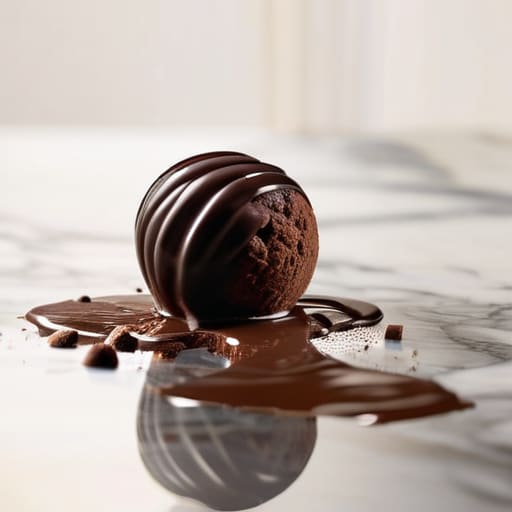
Mastery isn’t about how much information you can shovel into your mind; it is about how you refine it. We have discussed why passive reading is a recipe for disaster and why you must embrace the discomfort of active recall and the structural logic of chunking. Just as I wouldn’t dream of making a single truffle without first perfecting the temper of my chocolate, you cannot expect knowledge to stick if you haven’t applied the right thermal pressure to your study habits. If you aren’t feeling that slight mental friction, you aren’t actually learning—you are merely skimming the surface. Precision in your process is what separates a fleeting thought from a permanent skill.
I know it feels exhausting at first. Moving away from the easy, comfortable rhythm of highlighting a textbook feels like trying to sculpt fine detail with a blunt chisel. But remember: perfection is not a destination you reach by accident; it is a result of relentless, intentional repetition. Do not fear the mistakes or the moments where your memory fails you, because those are the exact points where the most profound learning occurs. Treat your mind like a high-end kitchen—keep it organized, respect the technique, and never settle for mediocrity. Now, go back to the bench and start practicing.