I still remember the day I realized that why bakers use grams instead of cups was not just about precision, but about simplicity. I was working in a test kitchen, trying to perfect a croissant recipe, and I found myself constantly converting between cups and grams. It was a tedious process, and I often ended up with inconsistent results. That’s when I decided to ditch cups altogether and switch to grams. It was a game-changer. My baked goods became more consistent, and I was able to replicate recipes with ease.
As someone who’s spent years testing and developing recipes, I’m excited to share my experience with you. In this article, I’ll cut through the hype and give you the straight truth about why bakers use grams instead of cups. I’ll share my own story of how switching to grams improved my baking, and provide you with practical tips on how to make the switch yourself. My goal is to help you bake with confidence and precision, without getting caught up in unnecessary complexity. I’ll show you that using grams is not just about being a “professional” baker, but about being a smart baker who wants to produce consistent, high-quality results.
Table of Contents
Why Bakers Use Grams
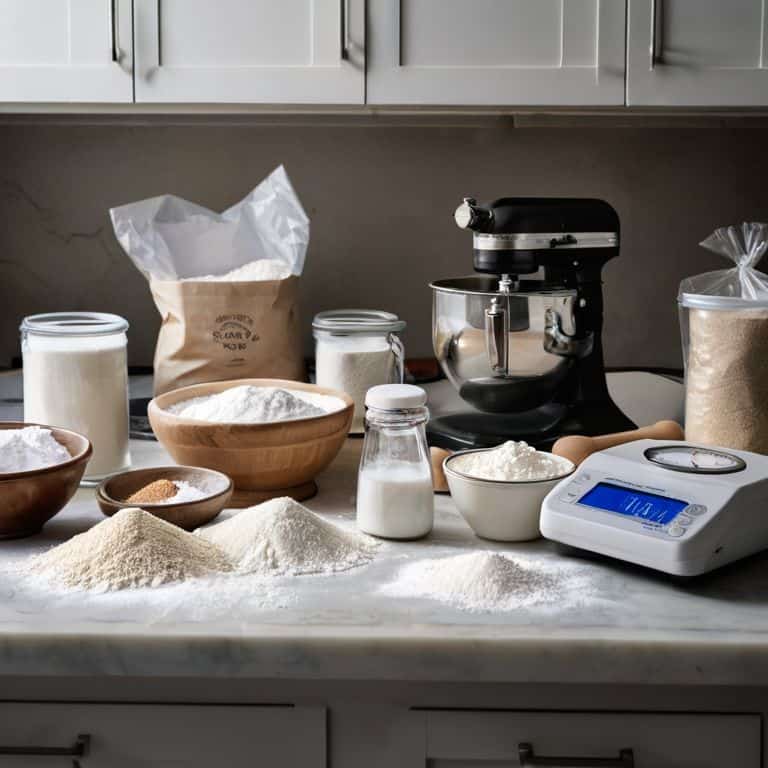
As a meticulous baker, I’ve come to realize the importance of precise measurements in achieving consistent results. When I first started baking, I relied on cups to measure my ingredients, but I soon discovered that this method was prone to errors. The density of ingredients can vary greatly, and using cups doesn’t account for these differences. For instance, a cup of flour can weigh anywhere from 100 to 150 grams, depending on how it’s scooped and packed.
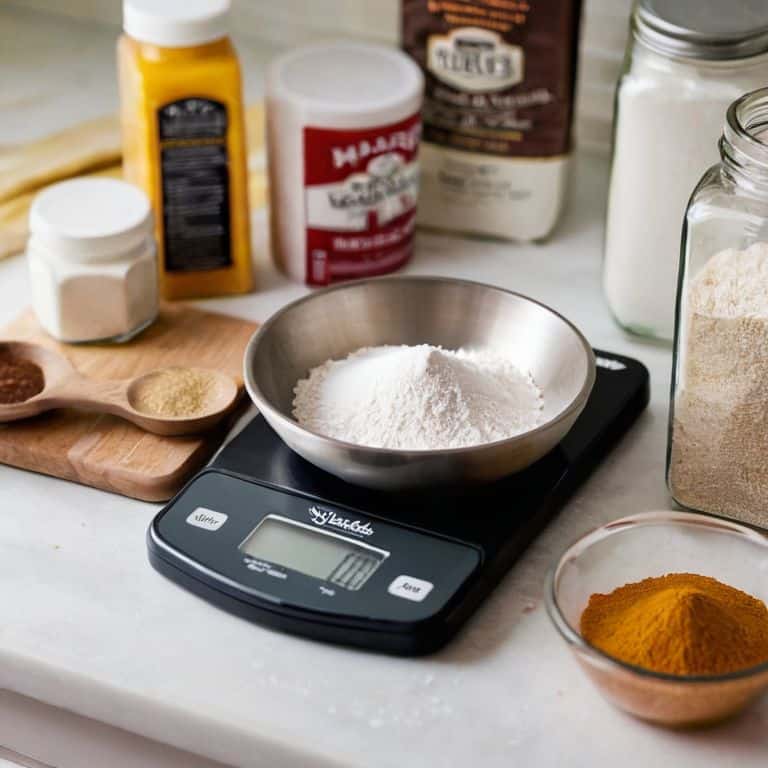
I’ve found that converting recipes from cups to grams is a game-changer. Not only does it ensure accuracy, but it also makes it easier to scale recipes up or down. With a digital kitchen scale, I can quickly and easily measure out the exact amount of each ingredient, taking into account their unique densities. This has been especially helpful when perfecting my croissant recipe, where even small variations in ingredient ratios can affect the final product.
By using a baking scale and measuring ingredients in grams, I’ve been able to minimize common baking measurement mistakes and achieve more consistent results. It’s a small investment that pays off in the long run, and I highly recommend it to any serious baker. Whether you’re a beginner or an experienced baker, making the switch to grams can make a significant difference in the quality of your baked goods.
Converting Recipes With Ease
When I’m working with a new recipe, I appreciate how easily I can scale up or down using grams. It’s a simple math problem, and it ensures that my ingredients are always in proportion. This has been especially helpful when I’m testing new croissant recipes – a little precision goes a long way in achieving those perfect, flaky layers.
I’ve found that converting recipes from cups to grams is relatively straightforward, even for complex recipes. By using an accurate conversion chart, I can quickly substitute grams for cups and get baking. This has saved me from countless mistakes and ensured that my baked goods turn out consistently delicious.
Precise Measurements Matter
When it comes to achieving consistent results in baking, precise measurements are crucial. I’ve seen many a batch of croissants ruined by inaccurate measurements, and it’s a hard lesson to learn. In my test kitchen days, we’d often get complaints about recipes not turning out as expected, only to discover that the issue lay in the measurement stage.
I’ve found that using a digital scale to measure ingredients in grams leads to more reliable outcomes, as it eliminates the potential for human error. By taking the guesswork out of measuring, I can focus on perfecting my lamination technique, which is essential for creating those flaky, buttery layers that make a great croissant.
Grams Over Cups for Baking
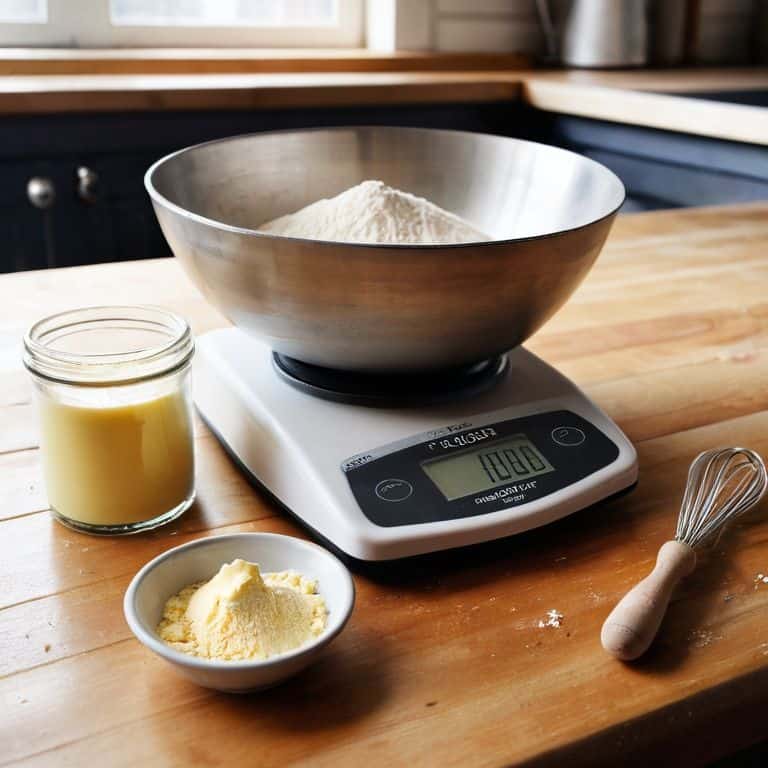
When it comes to baking, precise measurements are crucial for achieving consistent results. I’ve found that using grams instead of cups makes a significant difference in the quality of my baked goods. For instance, when I’m perfecting my croissant recipe, I need to ensure that the ratio of flour to butter is exactly right. This is where converting recipes from cups to grams becomes essential. By using a digital kitchen scale, I can accurately measure the ingredients, taking into account the density of baking ingredients.
In my experience, common baking measurement mistakes can be avoided by using a digital scale. For example, a slight variation in the amount of flour can affect the texture and structure of the final product. To minimize errors, I always use a scale to measure my ingredients, and I’ve written reviews of various baking scale reviews to help others make informed decisions. By investing in a good digital scale, bakers can ensure that their measurements are accurate, which is vital for producing high-quality baked goods.
As a baking consultant, I’ve seen firsthand the benefits of using a digital kitchen scale. Not only does it provide accurate measurements, but it also makes it easier to convert recipes with ease. By using grams, bakers can scale up or down recipes with confidence, knowing that the proportions will remain the same. This is particularly useful when baking in large quantities or when trying out new recipes.
Avoiding Common Measurement Mistakes
When I’m baking, I’ve found that using a digital scale to measure ingredients in grams helps me avoid common mistakes. This is especially important when making delicate pastries like croissants, where small variations in ingredient ratios can affect the final product. By weighing ingredients accurately, I can ensure that my dough comes together consistently, which is crucial for achieving that perfect layering and flakiness.
In my experience, precise measurement is key to avoiding errors that can ruin an entire batch of baked goods. I’ve seen it happen time and again: a slight miscalculation in the amount of flour or sugar can throw off the entire recipe, resulting in a disappointing finish. By using grams and a digital scale, I can minimize the risk of these mistakes and focus on perfecting my craft.
Benefits of Digital Kitchen Scales
I’ve found that investing in a good digital kitchen scale is essential for any serious baker. One of the main benefits of using a digital scale is that it allows for extremely accurate measurements, which is crucial when working with recipes that require precise ingredient ratios. This accuracy helps to ensure that your baked goods turn out consistently, with the right texture and flavor.
In my own kitchen, I’ve noticed a significant improvement in my baking results since switching to a digital scale. The ability to easily measure ingredients in grams has been a game-changer, especially when working with complex recipes that involve multiple components and precise measurements.
5 Essential Tips for Baking with Grams
- I’ve found that investing in a high-quality digital kitchen scale is a game-changer for precision measurements
- Converting your favorite recipes to grams can be a breeze with online tools or a simple spreadsheet
- When measuring ingredients, it’s crucial to use the correct unit of measurement – milliliters for liquids and grams for dry ingredients
- Avoid the common mistake of scooping ingredients directly into the mixing bowl – instead, scoop onto a piece of parchment paper or a separate container to ensure accuracy
- Store your ingredients in airtight containers and label them with their weight in grams to streamline your baking process and reduce errors
Key Takeaways for Accurate Baking
I’ve found that using grams instead of cups just makes baking easier and more reliable – it’s a game-changer for consistent results
Precision is key: investing in a digital kitchen scale is a no-brainer for any serious home baker, as it eliminates the guesswork from measuring ingredients
Converting recipes to use grams is simpler than you think, and it opens up a world of baking possibilities – trust me, I’ve done it with all my favorite recipes
The Weight of Precision
For me, using grams is not just about accuracy – it’s about trust; when I measure ingredients by weight, I know I’m getting the same result every time, and that’s the foundation of consistently great baking.
David Grant
Conclusion: The Power of Precision
As I reflect on my years of baking and testing, I’m reminded that precise measurements are the foundation of consistent results. Using grams instead of cups has been a game-changer for me, allowing for ease of conversion and minimizing the risk of errors. Whether you’re a seasoned baker or just starting out, I encourage you to make the switch to grams and experience the difference for yourself. With the help of digital kitchen scales and a little practice, you’ll be well on your way to creating delicious, reliable baked goods.
So, as you embark on your own baking journey, remember that investing in quality tools and adopting a data-driven approach can make all the difference. Don’t be afraid to experiment, try new recipes, and push the boundaries of what’s possible in your kitchen. With grams as your guide, you’ll be unleashing your full creative potential and baking with confidence – and that’s a truly rewarding feeling.
Frequently Asked Questions
How do I easily convert my favorite recipes from cups to grams without sacrificing flavor or texture?
I swear by online conversion tools and a trusty digital kitchen scale. Simply enter the ingredient and volume, and it’ll spit out the weight in grams. For accuracy, I always re-weigh ingredients after conversion to ensure a perfect match. It’s a small step that guarantees consistent results, and it’s been a game-changer for my croissant recipe.
What are some common mistakes to avoid when using a digital kitchen scale to measure ingredients in grams?
When using a digital kitchen scale, I’ve found that common mistakes include not calibrating the scale, not using a stable surface, and not accounting for the weight of the container or bowl. To avoid these errors, always zero out the scale with the container on it and place it on a level surface.
Are there any specific types of baked goods that benefit more from using gram measurements over traditional cup measurements?
In my experience, delicate pastries like croissants and macarons really benefit from gram measurements. The precision is crucial for getting the lamination and texture just right. I’ve also found it helpful for consistent results in cakes and cookies, where small variations can add up quickly.