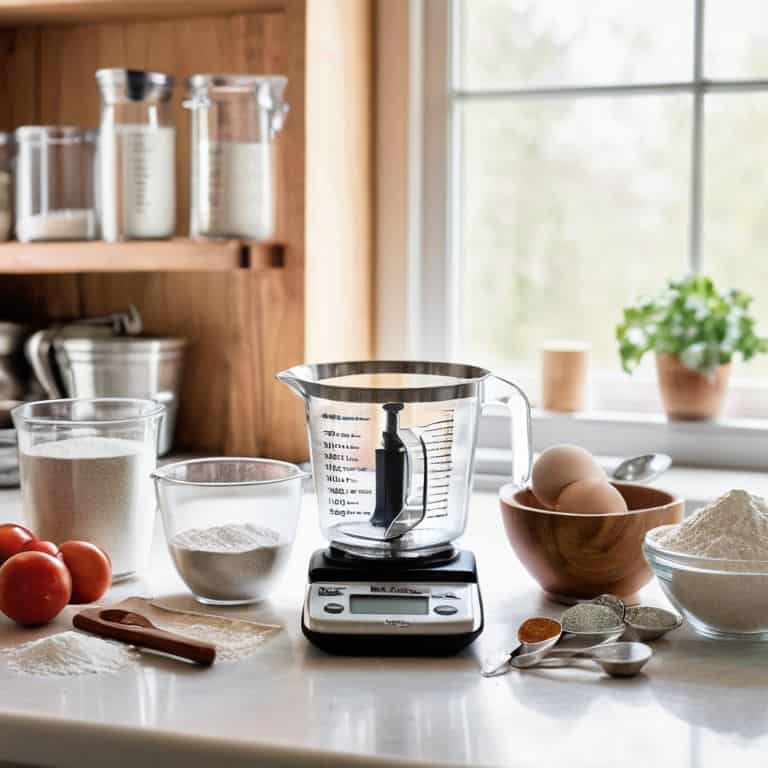
I still remember the day one of my students, a talented young baker, presented me with a cake that was, unfortunately, a disaster. The poor thing had sunk in the middle and was as dense as a brick. When I asked her to walk me through her recipe, it became clear that the issue wasn’t with her technique, but with how to measure ingredients correctly. She had been scooping and pouring without a second thought, unaware that this lack of precision was the culprit behind her cake’s demise. It’s a mistake I’ve seen time and time again, and one that can be easily avoided with a little knowledge and practice.
In this article, I’ll share with you the secrets to accurate ingredient measurement, a skill that will elevate your baking from good to great. You’ll learn the importance of precision and how to apply it in your everyday baking, from the simple act of measuring flour to the more complex task of balancing flavors. By the end of this guide, you’ll be equipped with the knowledge and confidence to tackle even the most intricate recipes, and you’ll understand that mastering how to measure ingredients correctly is the key to unlocking a world of baking possibilities.
Table of Contents
Guide Overview: What You'll Need
Total Time: 30 minutes
Estimated Cost: $0 – $10
Difficulty Level: Easy
Tools Required
- Digital Scale (for precise measurements)
- Measuring Cups (dry and liquid)
- Measuring Spoons (for small quantities)
Supplies & Materials
- Ingredients to be measured
Step-by-Step Instructions
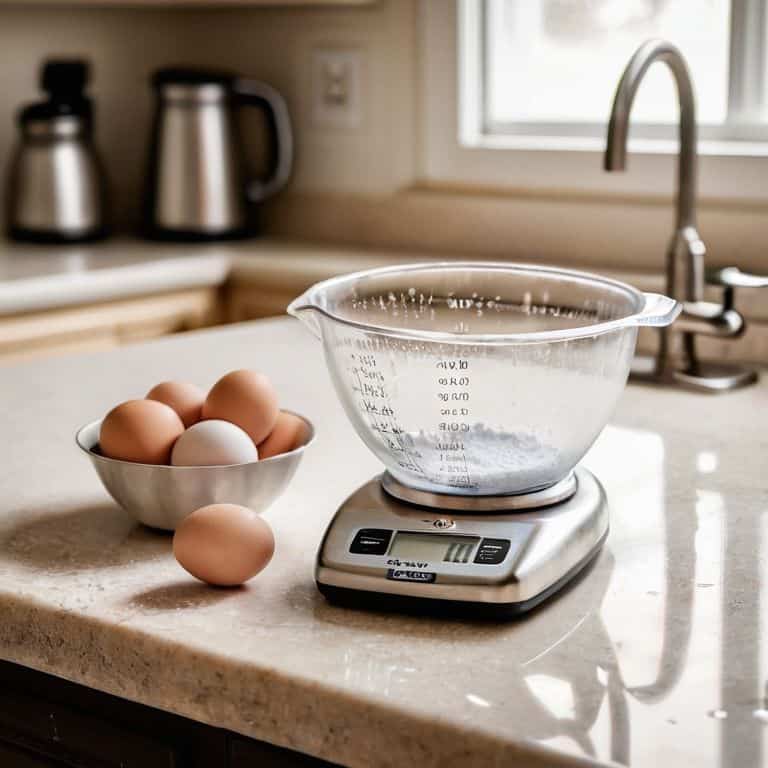
- 1. First, invest in a digital kitchen scale, it’s a game-changer for accurate measurements. I like to think of it as my right-hand man in the kitchen, always ensuring that my ingredients are measured to the exact gram. When choosing a scale, look for one that has a high weight capacity and is easy to clean.
- 2. Next, familiarize yourself with the different units of measurement, such as grams, milliliters, and teaspoons. Understanding the conversions between these units will make your baking life so much easier. For instance, knowing that 1 teaspoon is equivalent to 5 milliliters can save you from a lot of confusion in the long run.
- 3. Now, let’s talk about dry ingredients, such as flour, sugar, and cocoa powder. To measure these ingredients accurately, scoop them into your measuring cup using a spoon, and then level them off with a straight edge or knife. Don’t pack down the ingredients, as this can lead to inconsistent measurements.
- 4. When measuring liquids, such as water, milk, or oil, make sure to use a liquid measuring cup. Place the cup on a flat surface and read the measurement at eye level. Be careful not to spill or splash, as this can affect the accuracy of your measurements.
- 5. Measuring sticky ingredients, like honey or syrup, can be a bit tricky. To make it easier, lightly spray your measuring cup with cooking spray before adding the ingredient. This will prevent it from sticking to the cup and make it easier to pour.
- 6. If a recipe calls for a combination of ingredients, such as butter and sugar, make sure to measure each ingredient separately. This will ensure that you’re getting the right proportions and avoiding any potential errors. Double-check your measurements before adding them to your mixing bowl.
- 7. Finally, record your measurements as you go, especially if you’re trying out a new recipe. This will help you keep track of your ingredients and make it easier to troubleshoot if something goes wrong. I like to use a notebook or a baking app to keep all my measurements and recipes organized.
Mastering Measurement
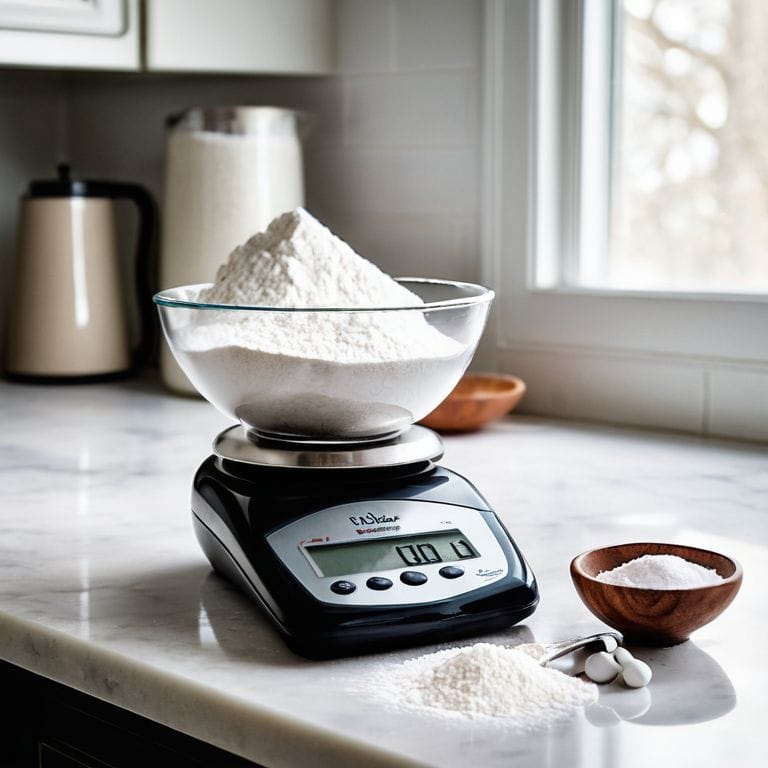
As we dive deeper into the world of precise measurement, it’s essential to be aware of common measuring mistakes that can affect the outcome of our baked goods. One of the most critical aspects of measuring is ensuring our tools are accurate. This is where digital kitchen scale calibration comes into play. By regularly calibrating our scales, we can guarantee that our measurements are spot on, which is crucial in baking.
Measuring dry ingredients accurately can be a bit tricky, but with the right techniques and tools, it becomes a breeze. I always recommend using precise measurement tools for baking, such as a digital scale or a set of measuring spoons with clear markings. When it comes to converting between units of measurement, it’s vital to understand the recipe measurements and make adjustments accordingly. This might seem like a minor detail, but trust me, it can make all the difference in the world.
To take your measuring skills to the next level, I suggest investing in a good set of measuring cups and spoons, as well as a digital scale. Understanding recipe measurements is key to successful baking, and with practice, you’ll become a pro at measuring ingredients with ease. Remember, precise measurement is not just about following a recipe; it’s about mastering the art of baking. By doing so, you’ll be able to create delicious treats that will impress anyone, and that’s what baking is all about.
Avoiding Common Measuring Mistakes
When measuring ingredients, it’s easy to fall into common traps. I’ve seen students inadvertently pack down flour or scoop ingredients with a heaping spoon, throwing off the entire recipe. To avoid these mistakes, make sure to level off dry ingredients and use a digital scale for precise measurements. A simple miscalculation can lead to a dense cake or a batch of cookies that spread too much.
By being mindful of these potential pitfalls, you’ll be well on your way to mastering measurement. Remember, it’s all about precision and attention to detail. I always tell my students to take their time and measure twice – it’s better to be safe than sorry, especially when it comes to baking. With practice, you’ll develop a keen eye for measurement and be able to troubleshoot any issues that arise.
The Science of Scoops Precise Measurement
Now that we’ve covered the basics of measuring ingredients, let’s dive deeper into the science behind it. When I say “scoops,” I’m not talking about approximating ingredients with a regular spoon. I mean using a digital scale to weigh your ingredients with precision. This is where the magic happens, or rather, the science. You see, when you weigh your ingredients, you’re ensuring that your recipe turns out consistently, every time. It’s not just about following a recipe, it’s about understanding the chemical reactions that occur when ingredients interact with each other.
By using a digital scale, you’re taking the guesswork out of baking. You’re ensuring that your flour, sugar, and butter are in perfect harmony, which is crucial for achieving the right texture and flavor. Trust me, I’ve seen students struggle with inconsistent results, only to realize that their measurement techniques were off. With precise measurement, you’ll be able to troubleshoot issues and make adjustments with confidence.
Measuring Like a Pro: 5 Essential Tips
- Use a digital kitchen scale to weigh ingredients for accuracy, as volume measurements can be inconsistent
- Choose the right measuring cups for the job, whether it’s dry or liquid ingredients, to prevent spills and errors
- Level off dry ingredients with a straight edge or knife to ensure precise measurements and prevent over- or under-measuring
- Measure liquids at eye level to avoid parallax errors, and use a liquid measuring cup on a flat surface for stability
- Sift or aerate ingredients like flour or cocoa powder before measuring to ensure they’re evenly packed and accurate in volume
Key Takeaways for Accurate Ingredient Measurement
Measuring ingredients correctly is crucial for achieving consistent and desirable results in baking, and it’s essential to understand the science behind why precise measurement matters
By mastering the art of precise measurement, including using digital scales and measuring cups, and being mindful of common measuring mistakes, you’ll be able to bake with confidence and precision
Remember, accurate measurement is not just about following a recipe, it’s about understanding the chemical reactions that occur during baking, and how ingredients interact with each other, which will take your baking skills to the next level
The Measure of Success
Measuring ingredients isn’t just about following a recipe, it’s about understanding the chemistry of baking – and with that understanding, comes the power to create something truly extraordinary, every time.
Beatrice Quinn
Measuring Up to Baking Success
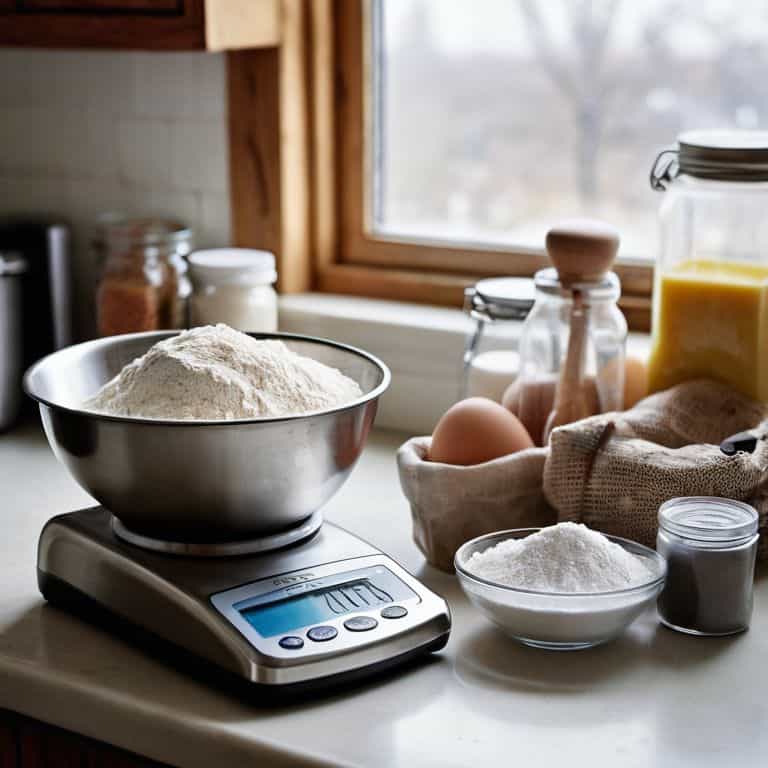
As we’ve explored the world of measurement in baking, it’s clear that precision is key. From understanding the importance of using a digital scale to mastering the art of scooping ingredients, every step counts in achieving the perfect bake. We’ve also delved into the science behind measurement, discussing how different techniques can affect the final outcome of our baked goods. By avoiding common measuring mistakes and taking the time to ensure accuracy, you’ll be well on your way to becoming a confident baker.
So, as you continue on your baking journey, remember that practice makes perfect. Don’t be discouraged by initial mistakes – instead, use them as opportunities to learn and grow. With time and patience, you’ll develop a keen sense of measurement mastery, and your baked goods will be all the better for it. Keep in mind that baking is a journey, not a destination, and the joy is in the process of creation, experimentation, and sharing your delicious creations with others.
Frequently Asked Questions
What is the most accurate way to measure ingredients when a recipe calls for a combination of dry and liquid ingredients?
When combining dry and liquid ingredients, I always recommend using a digital scale for dry ingredients and a measuring cup with markings for liquids. This ensures accuracy, as cup measurements can be inconsistent. For liquids, place the measuring cup on a flat surface and read the meniscus (the curve of the liquid) at eye level for the most precise measurement.
How can I ensure that my digital kitchen scale is calibrated correctly to get precise measurements?
To calibrate your digital kitchen scale, simply place a known weight, like a 1-pound bag of flour, on it and adjust the settings accordingly. Some scales may also have a built-in calibration feature – be sure to check your user manual for specific instructions. Trust me, precise measurements start with a reliable scale!
Are there any specific measuring tools or techniques that are best suited for measuring small quantities of ingredients, such as spices or leavening agents?
For small quantities, I swear by digital scales and miniature measuring spoons. They’re a game-changer for spices and leavening agents, allowing for pinpoint accuracy. I also recommend using a small bowl or ramekin to corral those tiny measurements, making it easier to scoop and pour with precision.