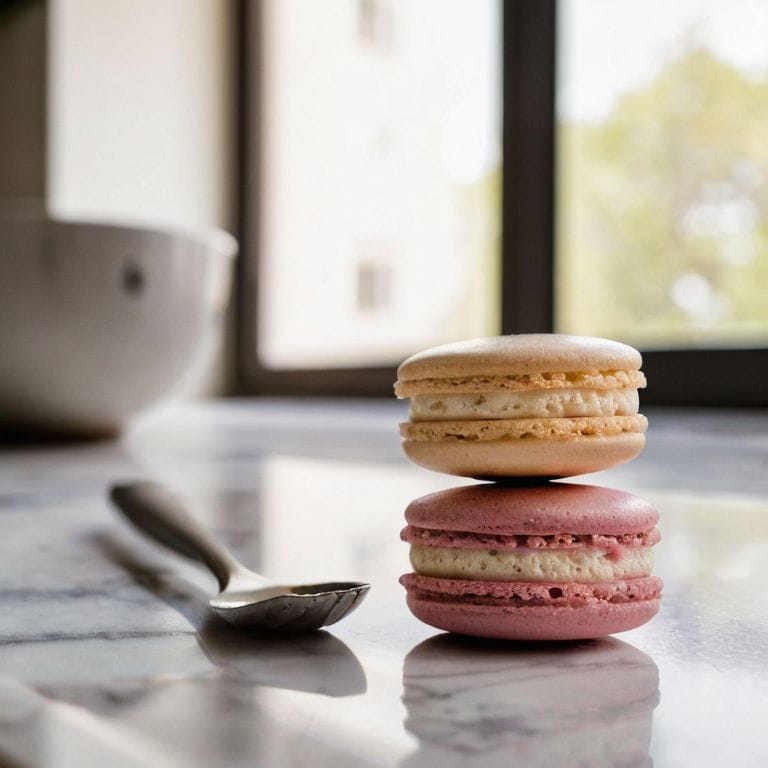
I still remember the first time I attempted to make macarons – it was a disaster. I had heard about the common macaron mistakes and how to fix them, but I didn’t think they applied to me. My batter was overmixed, my piping technique was off, and my feet were too big. It was a hard lesson to learn, but it taught me the importance of mastering the basics. As a pastry chef, I’ve seen many home bakers struggle with the same issues, and it’s time to set the record straight. The truth is, making perfect macarons is not about following a secret recipe, but about understanding the science behind the ingredients and the technique.
In this article, I’ll share my expertise on how to identify and fix common macaron mistakes, from uneven shells to sticky bottoms. You’ll learn how to troubleshoot your problems and develop a consistent technique that will take your macaron game to the next level. I’ll provide you with practical tips and honest advice, gained from years of experience in some of Paris’s top pastry kitchens. By the end of this guide, you’ll be equipped with the knowledge and confidence to create beautiful, delicious macarons that will impress even the most discerning palates. So, let’s get started and turn those macaron mishaps into masterpiece-worthy treats.
Table of Contents
Guide Overview: What You'll Need
Total Time: 1 hour 15 minutes
Estimated Cost: $10 – $20
Difficulty Level: Intermediate
Tools Required
- Oven thermometer to ensure accurate temperature
- Piping bag with round tip
- Silicone mat for even baking
Supplies & Materials
- Almond flour fresh and sifted
- Confectioners sugar sifted
- Egg whites room temperature
- Food coloring optional
Step-by-Step Instructions
- 1. First, let’s tackle the issue of overmixing the batter, which can lead to dense, chewy macarons instead of the desired delicate, airy texture. To avoid this, make sure to mix your ingredients just until they come together in a smooth, shiny batter – think of it as the moment when everything is just combined, but still retains a bit of _luster_.
- 2. Next, it’s essential to sift your almond flour to ensure it’s evenly textured and free of lumps, which can cause macarons to become misshapen or develop unwanted _air pockets_. Sifting also helps to incorporate air and reduces the likelihood of overmixing when you combine the almond flour with other ingredients.
- 3. Now, let’s move on to the often-misunderstood process of aging the egg whites, which is crucial for creating macarons with a smooth, rounded top and a delicate foot. Aging the egg whites allows them to become more stable and easier to whip to the perfect consistency, resulting in a better overall texture and _structure_.
- 4. When it comes to piping the macaron batter, it’s all about achieving the perfect round shape. To do this, hold your piping bag straight up and down, with the tip just above the baking sheet, and squeeze out a small, rounded circle of batter. Tap the baking sheet gently to remove any _air bubbles_ and help the macarons develop their signature feet.
- 5. After piping, allow the macarons to rest and form a skin, which is essential for creating the characteristic “foot” at the bottom of the shell. This step, also known as “aging” the macarons, can take anywhere from 30 minutes to several hours, depending on the humidity and temperature of your environment. Be patient, as this step is crucial for developing the right _texture_.
- 6. Once your macarons have rested, it’s time to bake them to perfection. To achieve the perfect feet and texture, make sure your oven is at the correct temperature, and consider using a _silicone mat_ or parchment paper to prevent the macarons from sticking. Bake for the recommended time, then check for doneness by gently lifting one of the macarons – if the top doesn’t come off easily, they need a bit more time.
- 7. Finally, when assembling your macarons, remember that the right filling can make all the difference. Choose a filling that complements the flavor of your shells, and don’t overfill the macarons, as this can cause them to become unstable and _top-heavy_. A delicate balance of flavors and textures is key to creating truly exceptional macarons that will leave your friends and family in awe.
Fixing Common Macaron Mistakes
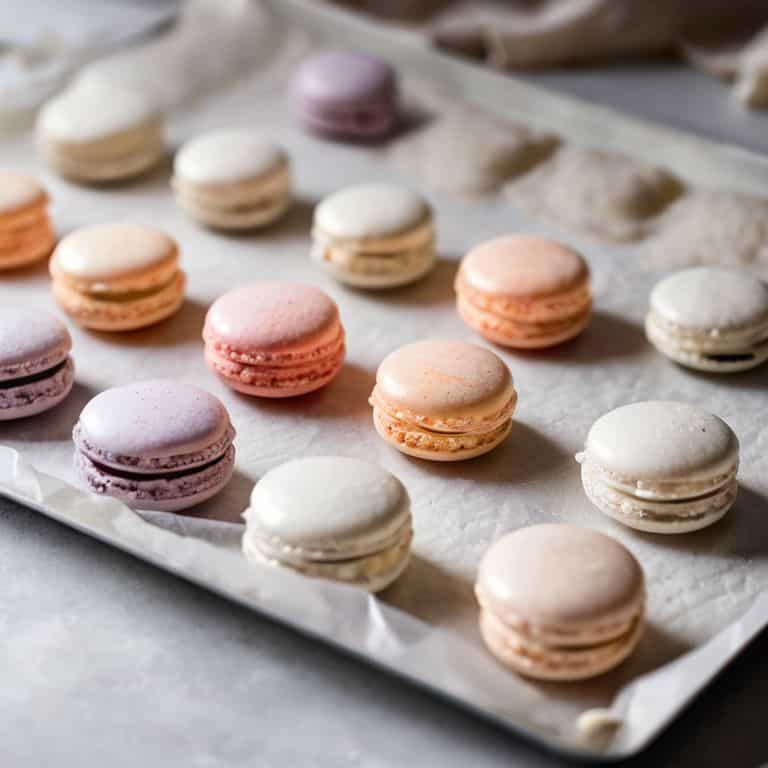
As we dive into the world of macaron perfection, it’s essential to address the delicate balance of meringue-based cookies. One of the most critical aspects of achieving this balance is understanding the importance of macaron aging. Allowing the macaron shells to age can significantly impact the final texture and appearance of the cookies. By giving the shells ample time to develop, you can avoid common meringue mistakes that lead to a less-than-desirable texture.
When it comes to troubleshooting, macaron shell texture issues can be a significant challenge. Overmixing the batter is a common culprit, resulting in a dense, chewy, or even rock-like texture. To combat this, it’s crucial to be gentle when folding the ingredients together, taking care not to overmix the macaron batter. By doing so, you’ll be able to achieve a smooth, rounded shell that’s both delicate and crispy.
To take your macarons to the next level, consider experimenting with macaron feet formation techniques. The formation of the “feet” at the base of the shell is a sign of a well-made macaron, and can be influenced by factors such as oven temperature and baking time. By mastering this technique, you’ll be able to create macarons that are not only delicious but also visually stunning, with a beautiful, rounded shape and a delicate macaron shell texture.
Troubleshooting Overmixing Macaron Batter
When I’m troubleshooting overmixing, I always start by assessing the batter’s consistency. If it’s too dense, I know I’ve overdone it. To rescue the batter, I try folding in a small amount of egg whites or almond flour to loosen it up. It’s a delicate balance, but with a gentle touch, you can often revive the mixture. I also make sure to sift my ingredients beforehand to ensure they’re well Incorporated and aerated, which helps prevent overmixing in the first place.
By being mindful of my mixing technique and taking corrective action when needed, I can usually salvage the batter and achieve the perfect, tender macarons I’m aiming for. It’s all about finesse and attention to detail – the hallmarks of a great pastry chef.
Understanding Macaron Aging for Perfect Texture
To achieve the perfect texture, it’s essential to understand the concept of macaron aging. After piping, I let my macarons sit at room temperature for a specified time to allow the shells to form a skin. This step, known as aging, helps the macarons develop their signature feet and smooth tops. The aging time can vary, but I typically leave them for 30 minutes to an hour, depending on the humidity and temperature of my kitchen.
Proper aging ensures that the macarons bake evenly and have a delicate, chewy interior. If you rush this process, you might end up with macarons that are too dense or have an uneven texture. By giving your macarons the time they need to age, you’ll be rewarded with a tender, delicate treat that’s sure to impress.
5 Essential Tips to Rescue Your Macarons from Common Mistakes
- Embrace the art of patience: don’t rush the aging process of your egg whites, as it’s crucial for achieving the perfect meringue-based texture
- Get your measurements just right: invest in a digital scale to ensure accuracy, especially when measuring almond flour and confectioner’s sugar
- Master the folding technique: learn to gently yet thoroughly fold your egg whites into the almond mixture to avoid deflating the batter
- Watch your oven temperature: invest in an oven thermometer to guarantee your macarons bake at the correct temperature, preventing overcooking or undercooking
- Don’t overcomplicate your flavors: start with simple, high-quality flavor combinations and gradually experiment with more complex ones to avoid overpowering your delicate macarons
Key Takeaways for Mastering Macarons
To achieve perfect macarons, it’s crucial to avoid overmixing the batter, as this can lead to dense and chewy cookies instead of delicate meringue-based morsels
Understanding the aging process of macaron shells is vital for developing the perfect texture, and this involves allowing the shells to sit at room temperature for a specified period to form a skin
By mastering the techniques of precise measurement, gentle folding, and optimal aging, home bakers can elevate their macaron game and create beautiful, delicious French meringue-based confections that rival those found in professional bakeries
The Art of Redemption
The beauty of macarons lies not in their perfection, but in the pursuit of it – for it’s in the correction of our mistakes that we discover the true art of French patisserie, and the triumph of transforming fragile, finicky meringue-based cookies into delicate, chewy masterpieces.
Alison Lawson
Mastering the Art of Macaron Perfection
As we’ve journeyed through the common mistakes that can plague even the most diligent of macaron enthusiasts, it’s clear that attention to detail is paramount. From the perils of overmixing to the importance of understanding macaron aging, each step in the process requires a deep respect for the technique and the ingredients. By acknowledging and addressing these potential pitfalls, we can elevate our baking skills and create macarons that are truly worthy of admiration. Whether you’re a seasoned pro or just starting out, the key to success lies in a combination of patience, practice, and a willingness to learn from our mistakes.
So as you embark on your next macaron-making adventure, remember that the pursuit of perfection is a beautiful journey, not a destination. Don’t be discouraged by setbacks or failures – instead, use them as opportunities to refine your craft and push the boundaries of what’s possible. With every batch, you’ll draw closer to mastering the art of macaron perfection, and the sense of creative fulfillment that comes with it will be all the more sweet.
Frequently Asked Questions
What are the most common mistakes to avoid when making macaron batter to ensure a smooth and even texture?
To achieve a smooth and even texture, beware of overmixing, inadequate sifting, and incorrect egg white aging. These missteps can lead to dense, chewy, or even cracked macarons. I always say, ‘respect the batter,’ and take your time when folding and mixing to ensure a delicate balance of ingredients.
How can I determine if my macarons are overmixed or undermixed, and what are the signs to look out for?
To gauge the mix, look for these signs: overmixed batter will be stiff and dense, while undermixed will be too runny. Check the batter’s flow: it should ribbon smoothly off the spatula, holding its shape briefly before disappearing. If it’s too thick, it won’t flow; too thin, it won’t hold its shape.
Are there any specific techniques or tricks for rescuing a batch of macarons that have been overmixed or have developed feet that are too large or irregular?
For overmixed or misshapen macarons, I swear by a gentle tapping technique to remove air pockets and a precise piping method to control foot size. If it’s too late, don’t despair – these imperfect gems can still be transformed into delicious macaron crumbs or cake decorations, saving your batch from the bin and showcasing your resourceful creativity.