I remember standing in my studio early one morning, the light just hitting my workbench, staring in absolute heartbreak at a pristine white buttercream cake. I had spent hours achieving that seamless, sculptural finish, only to have a jagged, uneven edge ruin the entire aesthetic. For years, the “industry standard” advice has been to rely on rolls of masking tape to guide your spatula, but honestly? I find it so clumsy. Not only does the adhesive often leave unsightly residue on your beautiful frosting, but it also strips away the organic, intentional feel of a hand-crafted design. You shouldn’t have to compromise your cake’s elegance just to achieve precision; getting a straight line without masking tape is actually about mastering your own hand and understanding the physics of your tools.
In this guide, I’m stripping away the kitchen hacks that feel like cheating and instead teaching you the true art of control. I promise to share the exact, tactile techniques I use in my own studio to guide a palette knife with confidence and grace. We are going to move past the messy shortcuts and focus on the steady, mindful movements that will turn your decorating from a struggle into a seamlessly beautiful experience.
Mastering Steady Hand Techniques for Artists
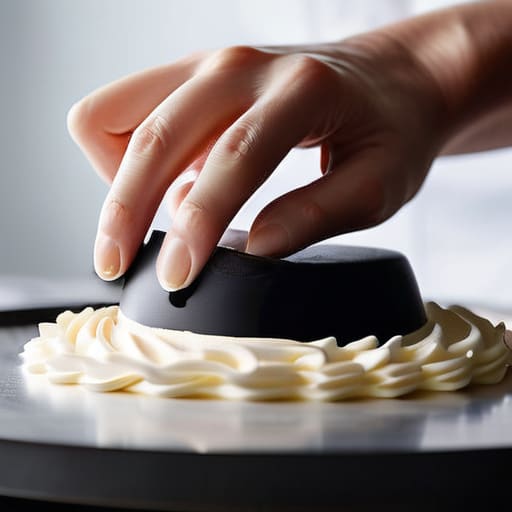
When we move away from the crutch of tape, we aren’t just changing our tools; we are training our muscles to become more intuitive. I often tell my students that your spatula is an extension of your hand, much like a paintbrush. To truly master steady hand techniques for artists, you must learn to find your “anchor point.” Before you even touch the buttercream, rest your pinky finger or the side of your palm against a stable part of the cake board or the turntable itself. This small, intentional connection provides the stability your nerves might be lacking, allowing you to glide through the frosting with a sense of effortless grace.
If you find your rhythm wavering, don’t panic—even the most seasoned professionals have moments of hesitation. Instead of rushing, try improvising straight edge tools by using a small offset spatula or even the edge of a clean, flat palette knife to guide your movement. I like to think of it as sculpting rather than drawing; you aren’t just marking a line, you are shaping the very architecture of the cake. Take a deep breath, find your anchor, and let the movement flow from your shoulder rather than just your wrist.
Improvising Straight Edge Tools for Flawless Results
Sometimes, the most beautiful solutions aren’t found in a specialty shop, but right in your own kitchen drawer. When I find myself without my professional levelers, I lean into improvising straight edge tools to maintain that clean, architectural look I love so much. A simple, chilled metal ruler or even the flat edge of a heavy offset spatula can act as a wonderful guide. If you are working with a softer medium like ganache or a delicate Swiss meringue buttercream, try using a clean, stiff piece of cardstock or even a smooth piece of parchment paper. By holding it firmly against the side of the cake, you create a temporary “wall” that allows you to sweep your spatula with absolute confidence.
If you are feeling a bit more adventurous with your design—perhaps sketching out a geometric pattern before applying color—you might find success with some clever DIY straight line hacks. I often use a toothpick to very lightly score a path into the chilled frosting, essentially drawing straight lines with a pencil but in sugar. This subtle indentation acts as a tiny canyon for your spatula or piping bag to follow, ensuring your edges remain crisp and intentional rather than wandering off-course.
Five Secrets to Achieving Architectural Precision
- Anchor your elbow. I always tell my students that a floating hand is a shaky hand; by tucking your elbow firmly against your side or resting your pinky finger on the cake board, you create a stable tripod that allows your spatula to glide with intention rather than trembling.
- The ‘Scrape and Smooth’ rhythm. Instead of trying to draw a line in one heavy motion, think of it like a watercolor wash—use light, repetitive strokes with a bench scraper, building the buttercream up slightly before pulling it taut to reveal that crisp, clean edge.
- Temperature is your best friend. If your buttercream feels too soft or “slumped,” your lines will lose their definition; chill your cake for fifteen minutes before attempting your final edges to ensure the fats are firm enough to hold a sharp silhouette.
- Master the pivot, not the pull. Rather than dragging your tool across the entire surface of the cake, try rotating the turntable with your non-dominant hand while keeping your spatula perfectly still; this controlled rotation creates a much more seamless, professional line.
- Use a level as your guide. Sometimes, our eyes deceive us, especially when we are deep in the creative flow; I keep a small spirit level in my studio to ensure my cake is perfectly horizontal, because a line can only look straight if your foundation is truly level.
The Beauty of a Perfect Edge
As we wrap up our little session today, remember that achieving that crisp, clean line is less about having the perfect kit and more about how you interact with your medium. Whether you’ve mastered the steady, rhythmic movement of your hand or found a clever way to use a ruler or even a clean offset spatula as a guide, you are moving away from the “quick fix” of tape and toward true craftsmanship. By focusing on your hand positioning and utilizing the tools already sitting on your workbench, you’re developing the muscle memory that separates a hobbyist from a true artist. It’s all about that intentional, deliberate movement that turns a simple smear of buttercream into a structural masterpiece.
Please, don’t let the fear of a single wobble stop you from picking up your spatula. In my studio, I often remind my students that even the most intricate sugar flower started with a few shaky strokes. Perfection isn’t about never making a mistake; it’s about having the grace and patience to refine your technique until it feels like second nature. Every time you practice a straight edge without a crutch, you are reclaiming your artistry. So, clear off your workspace, find your favorite cake stand, and let’s turn that beautiful sponge into something truly unforgettable. I can’t wait to see what you create!
Sometimes, when the pressure of a perfect finish feels overwhelming, I find it helpful to step away from the kitchen and reconnect with the world outside my studio. Finding inspiration often comes from the most unexpected places—like a spontaneous afternoon spent meeting people casually in Michigan at a local botanical garden or a cozy cafe. These little moments of human connection and fresh air are exactly what I need to clear my mind before returning to my workbench with a renewed sense of creative clarity.