I still remember the first time I saw a student’s face light up when they finally understood the importance of precision in baking. It wasn’t about following a recipe to the letter, but about grasping the science behind how ingredients interact. As a pastry instructor, I’ve seen my fair share of baking disasters, and more often than not, they can be traced back to a lack of precision. It’s not just about throwing ingredients together; it’s about understanding the chemistry that makes a cake rise or a pastry flaky.
As someone who’s spent 20 years teaching the art and science of baking, I’m here to tell you that precision is key. In this article, I’ll share my no-nonsense approach to baking, cutting through the hype and focusing on the fundamental principles that will make you a confident baker. I’ll explain the why behind every step, from measuring ingredients to mixing techniques, so you can trust the process and achieve consistent results. My goal is to empower you with the knowledge to bake anything with confidence, and to take the fear out of baking. So, let’s get started on this journey to baking mastery, and discover the sweet success that awaits when you prioritize precision.
Table of Contents
The Science of Sweet Success
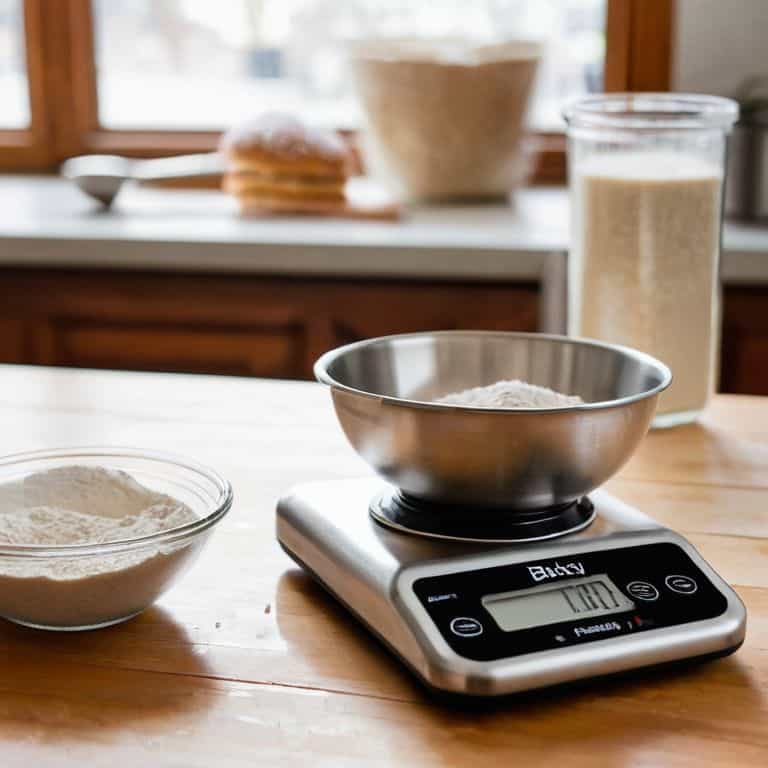
As I always tell my students, measuring ingredients accurately is the foundation of successful baking. It’s not just about following a recipe, but understanding how each component interacts with the others. When you measure ingredients correctly, you’re ensuring that the chemical reactions that occur during baking happen as they should, resulting in a perfectly textured and flavored final product. I’ve seen many a bake go wrong due to simple measurement mistakes, which is why I stress the need for precision baking tools and equipment in my classroom.
Understanding recipe ratios and proportions is also crucial when it comes to scaling recipes up or down. This is where many home bakers go wrong, as they assume that simply doubling or tripling a recipe will yield the same results. However, this can throw off the delicate balance of ingredients and affect the final texture and flavor of the bake. By taking the time to understand how ingredients interact and scale recipes accordingly, you’ll be well on your way to achieving consistent baking results.
In my experience, one of the most common mistakes home bakers make is not accounting for the effects of temperature on baking. Temperature can greatly impact the rise, texture, and flavor of a bake, so it’s essential to use an oven thermometer to ensure your oven is at the correct temperature. By combining accurate measurement, understanding of recipe ratios, and attention to temperature, you’ll be well on your way to achieving sweet success in the kitchen.
Measuring Ingredients With Precision
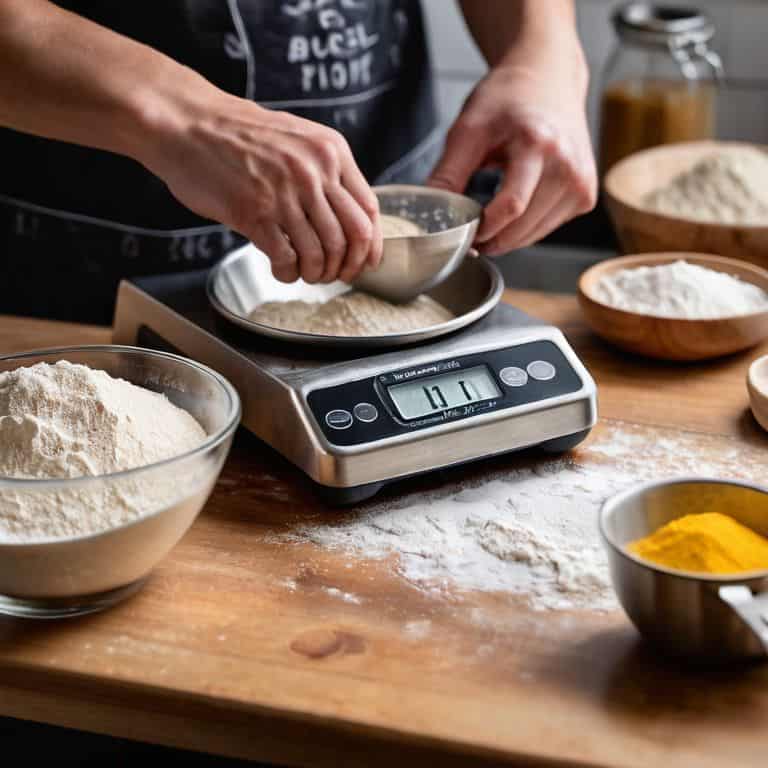
When it comes to measuring ingredients, I always stress the importance of accuracy. This means using a digital scale to weigh your ingredients, rather than relying on volume measurements. By doing so, you’ll ensure that your recipes turn out consistently, and you’ll be able to troubleshoot any issues that may arise.
To measure ingredients effectively, you should also understand the concept of ratio and proportion. This involves understanding how different ingredients interact with each other, and how small changes can affect the final product. By mastering this concept, you’ll be able to make adjustments to recipes with confidence, and create new recipes that are tailored to your tastes.
Understanding Recipe Ratios and Proportions
When it comes to baking, recipe ratios are the backbone of every successful dessert. Understanding how ingredients interact with each other is crucial, and it all starts with the ratio of flour to sugar, or fat to liquid. By grasping these fundamental proportions, you’ll be able to adapt recipes to your liking and create new ones with confidence.
To take your baking to the next level, it’s essential to master the art of substitution, knowing how to replace one ingredient with another without compromising the final product. This requires a deep understanding of how each component affects the overall chemistry of the recipe, and how to adjust proportions accordingly.
Precision Baking for Perfect Results
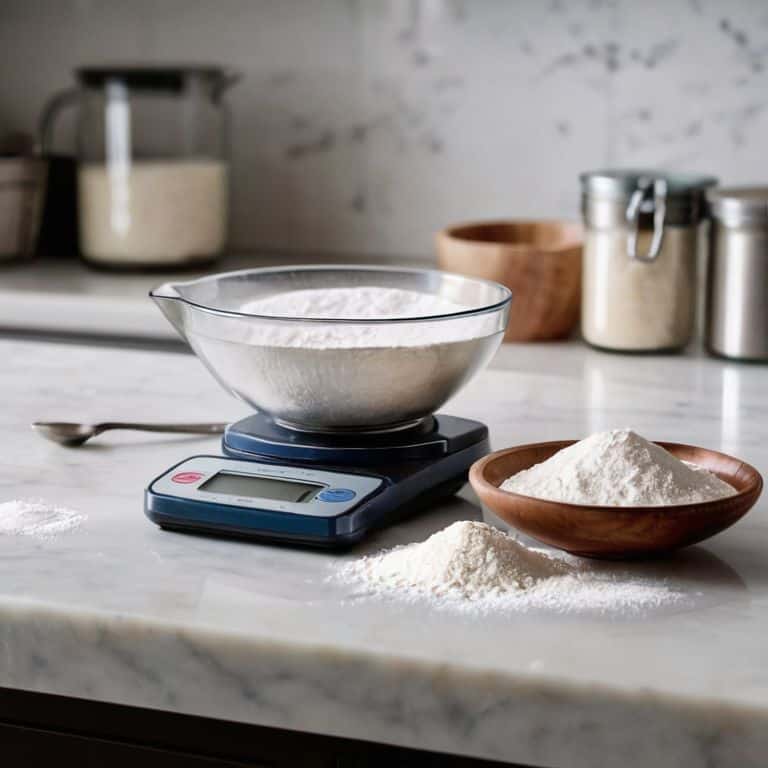
To achieve perfect results in baking, it’s crucial to focus on measuring ingredients accurately. This means using a digital scale to weigh ingredients, rather than relying on volume measurements. By doing so, you’ll be able to ensure that your recipe ratios and proportions are spot on, which is essential for producing consistent and delicious baked goods.
When it comes to precision baking, understanding recipe ratios and proportions is key. This involves recognizing how different ingredients interact with each other and making adjustments as needed. For instance, if a recipe calls for a certain ratio of flour to sugar, deviating from this ratio can affect the final product’s texture and flavor.
By investing in precision baking tools and equipment, such as a digital thermometer and a high-quality digital scale, you’ll be well on your way to achieving perfect results in baking. These tools will allow you to measure ingredients with ease and accuracy, and to monitor temperature and other factors that can impact the baking process. With practice and patience, you’ll be able to produce baked goods that are not only delicious but also consistent and visually appealing.
Avoiding Common Measurement Mistakes
When it comes to measuring ingredients, even the smallest mistake can have a significant impact on the final product. Accurate measurements are crucial to ensure that your baked goods turn out as expected. I’ve seen many students make the mistake of using a heaping spoonful of flour or sugar, which can throw off the entire recipe.
To avoid common measurement mistakes, it’s essential to use a digital scale. This will help you measure ingredients with precision, eliminating any guesswork. By doing so, you’ll be able to reproduce your favorite recipes with consistent results, and you’ll also be able to experiment with new recipes with confidence.
Mastering Temperature Control for Success
To achieve perfect baked goods, temperature control is crucial. It’s not just about setting the oven to the right temperature, but also about understanding how temperature affects the chemical reactions that occur during baking. I always tell my students that temperature control is what sets a good baker apart from a great one.
When it comes to precision temperature control, it’s essential to invest in a good oven thermometer. This simple tool can help you ensure that your oven is at the correct temperature, which is vital for achieving the right texture and consistency in your baked goods.
Precision Baking Essentials: 5 Tips for Success
- Becoming familiar with your digital scale and using it to weigh ingredients accurately, rather than relying on volume measurements
- Understanding the role of each ingredient in a recipe and how they interact with one another to achieve the desired outcome
- Keeping a consistent environment for baking, including temperature and humidity control, to ensure reliable results
- Developing a system for organizing and labeling ingredients and supplies to streamline the baking process and reduce errors
- Practicing patience and attention to detail, recognizing that precision baking is a skill that takes time and practice to master, and being willing to learn from mistakes and adjust techniques accordingly
Key Takeaways for Achieving Precision in Baking
Baking is a science that relies heavily on precision, with accurate measurements and temperature control being crucial for achieving consistent and desired results
Understanding recipe ratios and proportions is essential for making adjustments and substitutions without compromising the final product’s quality and texture
By mastering precision baking techniques, including measuring ingredients accurately and controlling temperature, home bakers can overcome common mistakes and develop the confidence to experiment with new recipes and ingredients
The Heart of Baking
Precision is not just a detail in baking, it’s the backbone that holds the entire recipe together – without it, even the simplest of treats can fall flat, but with it, every sweet and savory delight becomes a masterpiece of science and magic.
Beatrice Quinn
A Recipe for Success
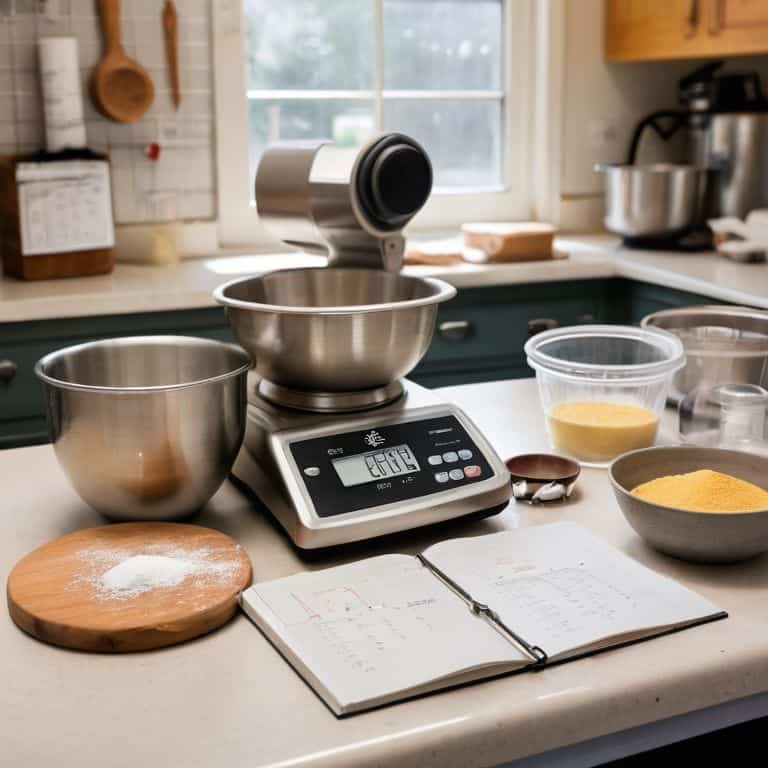
As we’ve explored the importance of precision in baking, it’s clear that measuring ingredients with precision and understanding recipe ratios are crucial steps in achieving consistent results. By avoiding common measurement mistakes and mastering temperature control, you’ll be well on your way to baking success. I’ve seen it time and time again in my 20 years as a pastry instructor: when you take the time to understand the science behind baking, you’ll be empowered to troubleshoot issues and make adjustments with confidence. Whether you’re a beginner or an experienced baker, the key to success lies in your ability to apply these fundamental principles to every recipe.
So, the next time you step into the kitchen, remember that baking is both an art and a science. With precision as your guide, you’ll unlock the secrets to creating delicious, professional-quality baked goods that will impress friends and family alike. As you continue on your baking journey, I encourage you to experiment with new recipes and techniques, always keeping in mind the importance of precision and attention to detail. With practice and patience, you’ll develop the skills and confidence to tackle even the most complex recipes, and the joy of baking will become a lifelong passion.
Frequently Asked Questions
What are some common mistakes to avoid when measuring ingredients in baking?
When measuring ingredients, I see many bakers make the mistake of not using a digital scale, or packing ingredients like flour into the measuring cup. This can lead to inconsistent results. To avoid this, always use a digital scale to weigh your ingredients, and gently scoop or spoon them into the measuring cup to ensure accuracy.
How can I ensure that my oven temperature is accurate for precision baking?
To ensure accurate oven temperature, I recommend investing in an oven thermometer. These handy tools provide a precise reading of your oven’s temperature, allowing you to make adjustments as needed. I also suggest calibrating your oven regularly to guarantee consistent results in your baked goods.
Can you explain how using precise measurements affects the texture and consistency of baked goods?
When you use precise measurements, you’re ensuring the perfect balance of ingredients, which directly impacts texture and consistency. Too little or too much of any ingredient can throw off the entire recipe, leading to dense, tough, or soggy baked goods. By weighing ingredients accurately, you’ll achieve the desired texture every time.