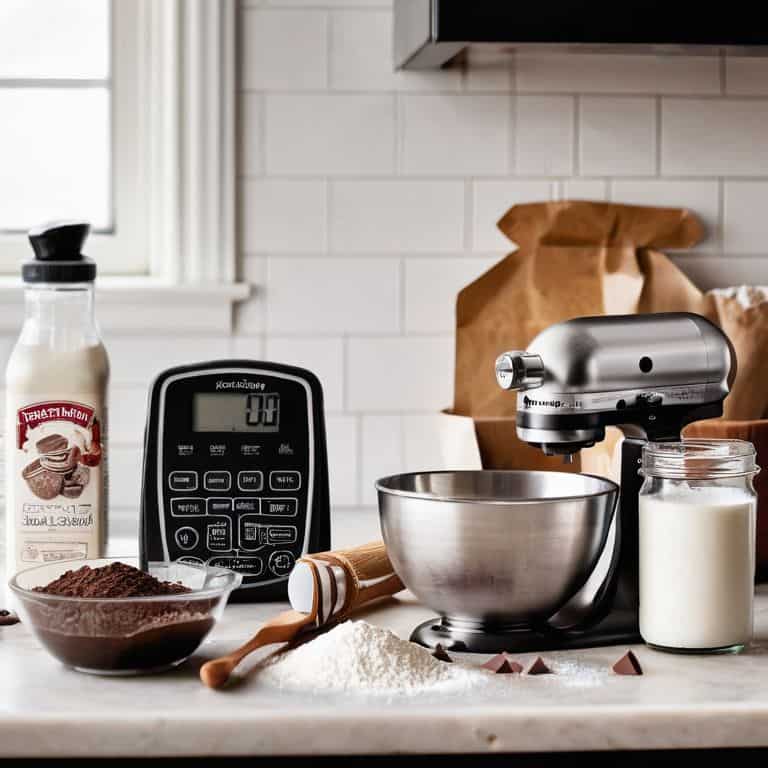
I still remember the frustration I felt as a young baker, struggling to make sense of a guide to converting baking measurements. It seemed like every recipe I came across used a different set of measurements, and I found myself stuck in a never-ending cycle of trial and error. But as I delved deeper into the world of baking, I discovered that the key to unlocking perfect pastries and cakes wasn’t magic, but rather a deep understanding of the science behind measurement conversions.
In this article, I promise to share my expertise with you, providing you with practical advice on how to master a guide to converting baking measurements. You’ll learn how to confidently convert between units, ensuring that your baked goods turn out light, fluffy, and full of flavor every time. I’ll walk you through the process step by step, explaining the why behind every conversion, so you can bake with precision and accuracy. By the end of this guide, you’ll be equipped with the knowledge to tackle even the most complex recipes with ease, and you’ll never have to worry about measurement mishaps again.
Table of Contents
- Guide Overview: What You'll Need
- Step-by-Step Instructions
- A Guide to Converting Baking Measurements
- 5 Essential Tips for Mastering Baking Measurement Conversions
- Key Takeaways for Mastering Baking Measurement Conversions
- The Heart of Precise Baking
- Conclusion: Mastering the Art of Measurement Conversions
- Frequently Asked Questions
Guide Overview: What You'll Need
Total Time: 30 minutes to 1 hour
Estimated Cost: $0 – $10
Difficulty Level: Easy
Tools Required
- Calculator (optional)
- Measuring Cups and Spoons (standard and metric)
Supplies & Materials
- Conversion Charts (printable or digital)
- Notebook or Paper (for recording conversions)
Step-by-Step Instructions
- 1. First, let’s establish a solid foundation by understanding the different types of measurements used in baking. We have dry ingredients, such as flour, sugar, and cocoa powder, which are typically measured in cups, grams, or ounces. On the other hand, liquid ingredients like milk, water, and oil are usually measured in cups, milliliters, or fluid ounces. It’s essential to grasp these differences to ensure accurate conversions.
- 2. Next, we need to familiarize ourselves with the conversion factors between these different units of measurement. For dry ingredients, 1 cup of all-purpose flour is equivalent to approximately 120 grams or 4.3 ounces. For liquid ingredients, 1 cup is equal to about 236.6 milliliters or 8 fluid ounces. Having these conversion factors handy will make the process much smoother.
- 3. Now, let’s dive into the conversion process itself. To convert a recipe from cups to grams, for instance, we’ll need to use a digital kitchen scale. Start by placing the empty bowl or container on the scale and taring it to zero. Then, add the ingredient slowly while monitoring the weight on the scale until you reach the desired weight.
- 4. When converting between different types of ingredients, such as from teaspoons to tablespoons or from milliliters to liters, it’s crucial to understand the hierarchy of measurements. For example, there are 3 teaspoons in 1 tablespoon, and 1,000 milliliters in 1 liter. This knowledge will help you navigate the conversions with ease.
- 5. Another important aspect to consider is the density of ingredients, which can affect the accuracy of our conversions. For instance, 1 cup of sifted flour will weigh less than 1 cup of packed flour due to the differences in density. Being aware of these variations will enable you to make adjustments as needed.
- 6. To make the conversion process more efficient, I recommend creating a conversion chart or table that outlines the most common measurement conversions. This can be a valuable resource to refer to whenever you’re working with a new recipe. You can include conversions for ingredients like butter, sugar, and flour, as well as common liquid measurements.
- 7. Finally, it’s essential to practice and double-check your conversions to ensure accuracy. Start with simple recipes and gradually move on to more complex ones. Remember to always use your digital scale and conversion chart to verify your measurements. With time and practice, converting baking measurements will become second nature, and you’ll be well on your way to becoming a confident and skilled baker.
A Guide to Converting Baking Measurements
As we delve deeper into the world of baking measurement precision, it’s essential to understand the importance of common baking conversions. These conversions are the backbone of any successful bake, and mastering them will take your baking to the next level. I always stress to my students that using metric to US baking conversions can be a game-changer, especially when working with complex recipes.
When it comes to baking ingredient ratios, accuracy is key. A slight miscalculation can throw off the entire recipe, resulting in a less-than-desirable outcome. That’s why I swear by accurate baking scales. They take the guesswork out of measuring ingredients, ensuring that your ratios are always spot on. By using a combination of weight and volume measurements, you’ll be able to achieve consistent results every time.
To make the conversion process even smoother, I recommend keeping a volume to weight baking chart handy. This will help you quickly look up the weight of a particular ingredient, making it easier to convert between units. By combining this chart with your newfound understanding of baking measurement precision, you’ll be well on your way to becoming a master baker. Remember, practice makes perfect, so don’t be afraid to experiment and try new things – and always keep your baking scales close by.
Mastering Metric to Us Baking Conversions
When converting metric to US baking measurements, precision is key. I always stress the importance of using a digital scale to ensure accuracy. To convert grams to cups, remember that 1 cup of all-purpose flour is approximately 120 grams. For liquids, 1 milliliter is equivalent to 1 gram, making conversions relatively straightforward.
By understanding these simple conversions, you’ll be able to tackle even the most complex recipes with confidence. Whether you’re working with a vintage recipe or a modern metric measurement, mastering these conversions will make all the difference in your baking.
Unlocking Accurate Baking Scales for Precision
To truly master measurement conversions, you need to understand the importance of accurate baking scales. I always say, investing in a good digital scale is one of the best decisions you can make as a baker. It allows you to measure ingredients with precision, which is crucial in baking. With a scale, you can ensure that your measurements are exact, taking the guesswork out of conversions.
By using a baking scale, you’ll be able to accurately measure ingredients in both metric and US units, making conversions a breeze. Trust me, the difference it makes is like night and day – your bakes will be more consistent, and you’ll be able to troubleshoot issues with ease. Whether you’re a beginner or a seasoned baker, a reliable baking scale is an essential tool in your arsenal.
5 Essential Tips for Mastering Baking Measurement Conversions
- Verify Your Scales: Invest in a reliable digital kitchen scale to ensure accuracy in your measurements, as small discrepancies can significantly impact your final product
- Understand the Difference: Recognize that 1 cup of flour does not weigh the same as 1 cup of sugar, and learn the approximate weights for common ingredients to improve your conversions
- Convert with Confidence: Familiarize yourself with online conversion tools or apps to quickly switch between metric and US measurements, saving you time and reducing errors
- Respect the Ratio: When scaling up or down a recipe, maintain the ingredient ratios to preserve the chemical balance and texture of your baked goods, avoiding potential disasters
- Practice Makes Perfect: Regularly practice converting between different units and systems to develop your skills and intuition, allowing you to become more comfortable and proficient in the kitchen
Key Takeaways for Mastering Baking Measurement Conversions
Baking with precision requires a thorough understanding of measurement conversions, and by mastering metric to US conversions, you’ll be able to tackle any recipe with confidence
Accurate baking scales are the backbone of precise measurements, and learning how to use them effectively will elevate your baking to a professional level
By applying the principles outlined in this guide, you’ll be empowered to convert any recipe to your preferred system, ensuring that your baked goods turn out perfectly every time, and giving you the freedom to experiment with new ingredients and recipes
The Heart of Precise Baking
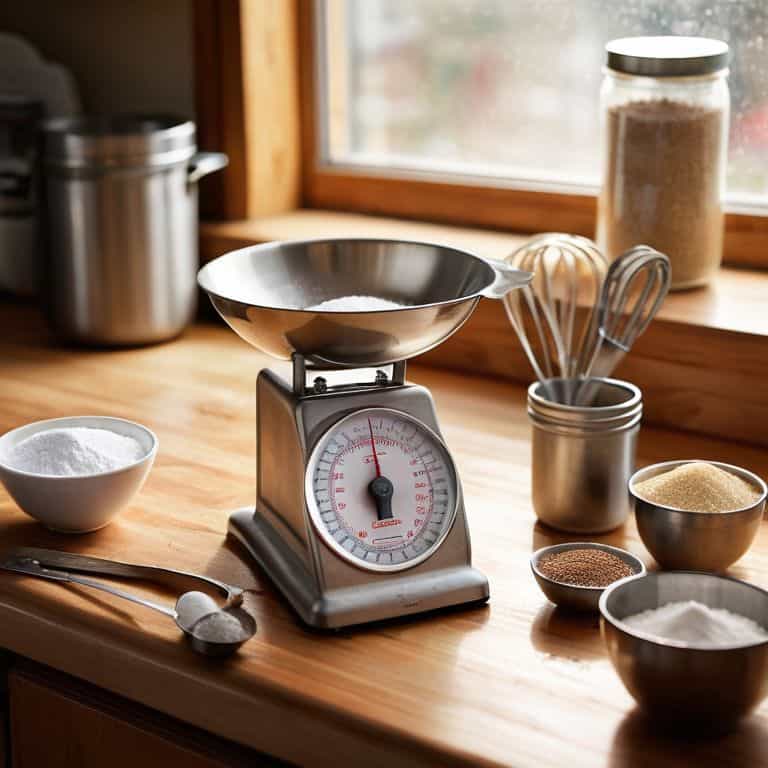
Converting baking measurements is not just about swapping units, it’s about understanding the chemical dance of ingredients and how precision can transform a good bake into a sublime one.
Beatrice Quinn
Conclusion: Mastering the Art of Measurement Conversions
As we conclude this comprehensive guide to converting baking measurements, let’s recap the essentials: understanding the difference between metric and US measurements, mastering the art of conversions, and investing in a reliable baking scale. By following these steps and practicing regularly, you’ll be well on your way to becoming a confident baker, capable of tackling even the most complex recipes with ease. Remember, accuracy is key when it comes to baking, and with these skills, you’ll be able to achieve consistent results and take your baking to the next level.
As you continue on your baking journey, keep in mind that precision is power. With the ability to convert measurements with ease, you’ll be free to explore new recipes and techniques, experimenting with different flavors and ingredients to create truly unique and delicious treats. So, don’t be afraid to get creative and try new things – with the foundation of measurement conversions under your belt, the possibilities are endless, and I have no doubt that you’ll become a master baker in no time.
Frequently Asked Questions
How do I convert a recipe from US measurements to metric if it includes ingredients like butter or flour that have different densities?
To convert US measurements to metric for ingredients like butter or flour, remember that 1 cup of all-purpose flour is approximately 120 grams, and 1/2 cup of unsalted butter is about 115 grams. Use a digital scale for accuracy, and don’t forget to consider the specific gravity of each ingredient for precise conversions.
Can I use an online conversion tool to convert baking measurements, or is it better to use a physical conversion chart or scale?
While online conversion tools can be handy, I always recommend using a physical scale for the most accurate measurements. It’s the best way to ensure precision, and it’s what I teach my students. A scale takes the guesswork out of conversions, giving you consistent results every time.
What are some common mistakes to avoid when converting baking measurements, and how can I troubleshoot issues if my baked goods don't turn out as expected?
To avoid common conversion mistakes, double-check your calculations and ensure you’re using the correct units. If your baked goods don’t turn out as expected, troubleshoot by examining the texture, flavor, and appearance – I can often diagnose the issue just by looking at a failed bake!